

Detection of pulmonary nodules evolution
PATIENT DATA:
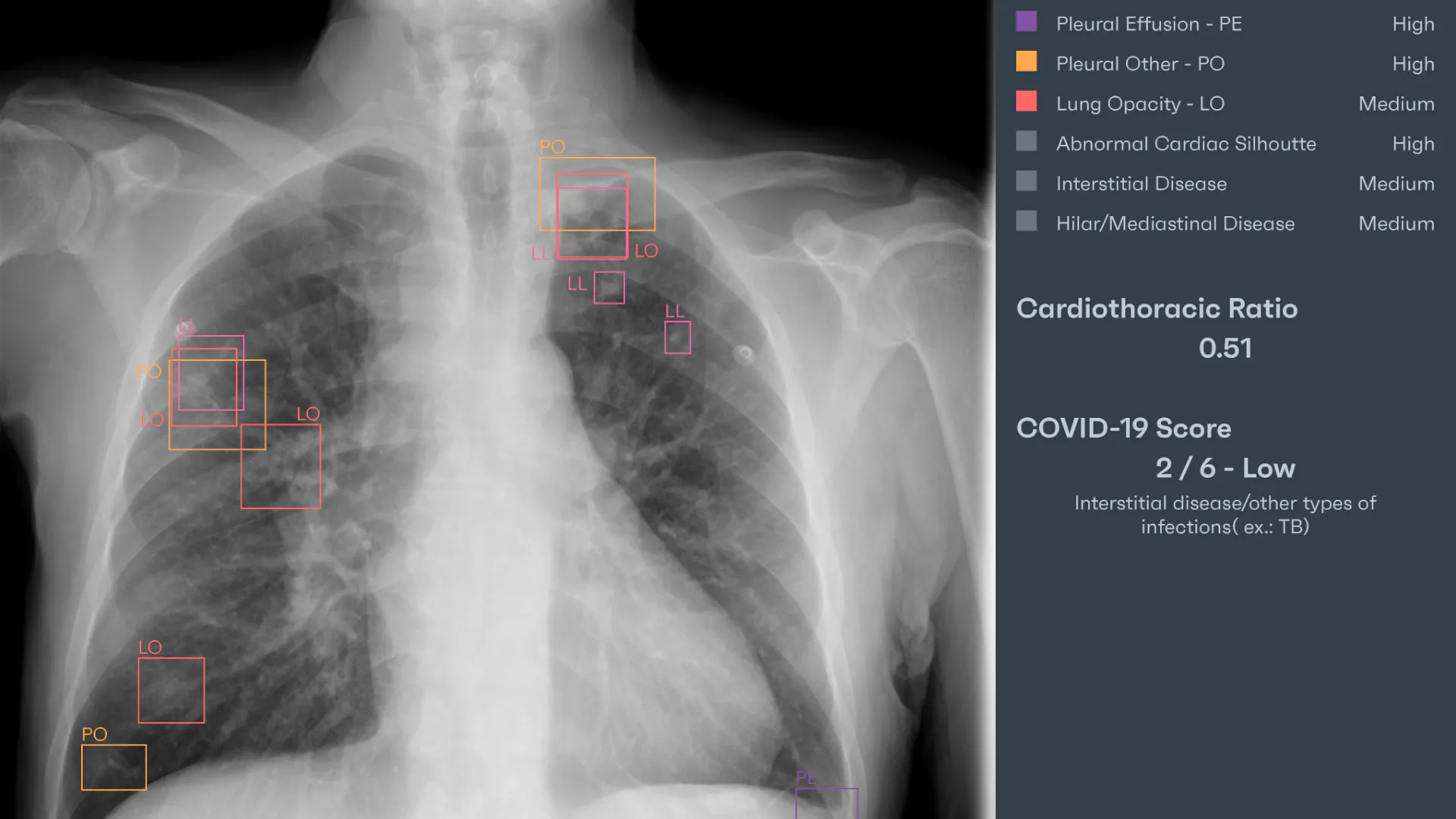
A known patient with left heart failure presents himself to the emergency unit for dyspnea and fatigue. On the chest X-ray, Rayscape detects the abnormal cardiac silhouette that associates the hilum density slightly increased in volume and apical pulmonary venous circulation.
A radiologist is notified of these changes and finds that they are suggestive of Acute Pulmonary Edema. The doctor is also notified of 2 lung opacities: one of them being located apically left, with increased intensity, most likely being a calcified lung nodule.


CASE DISCUSSION:
For the full characterization of the pulmonary opacity located in the right mid-thoracic area, it is recommended to be followed with a chest CT. Unfortunately, the patient is non-compliant and refuses any medical help, asking to be discharged from the hospital.
He returns to the emergency department after a period for a new episode of cardiac decompensation, this time Rayscape illustrating on the chest X-ray the appearance of new lung opacities.
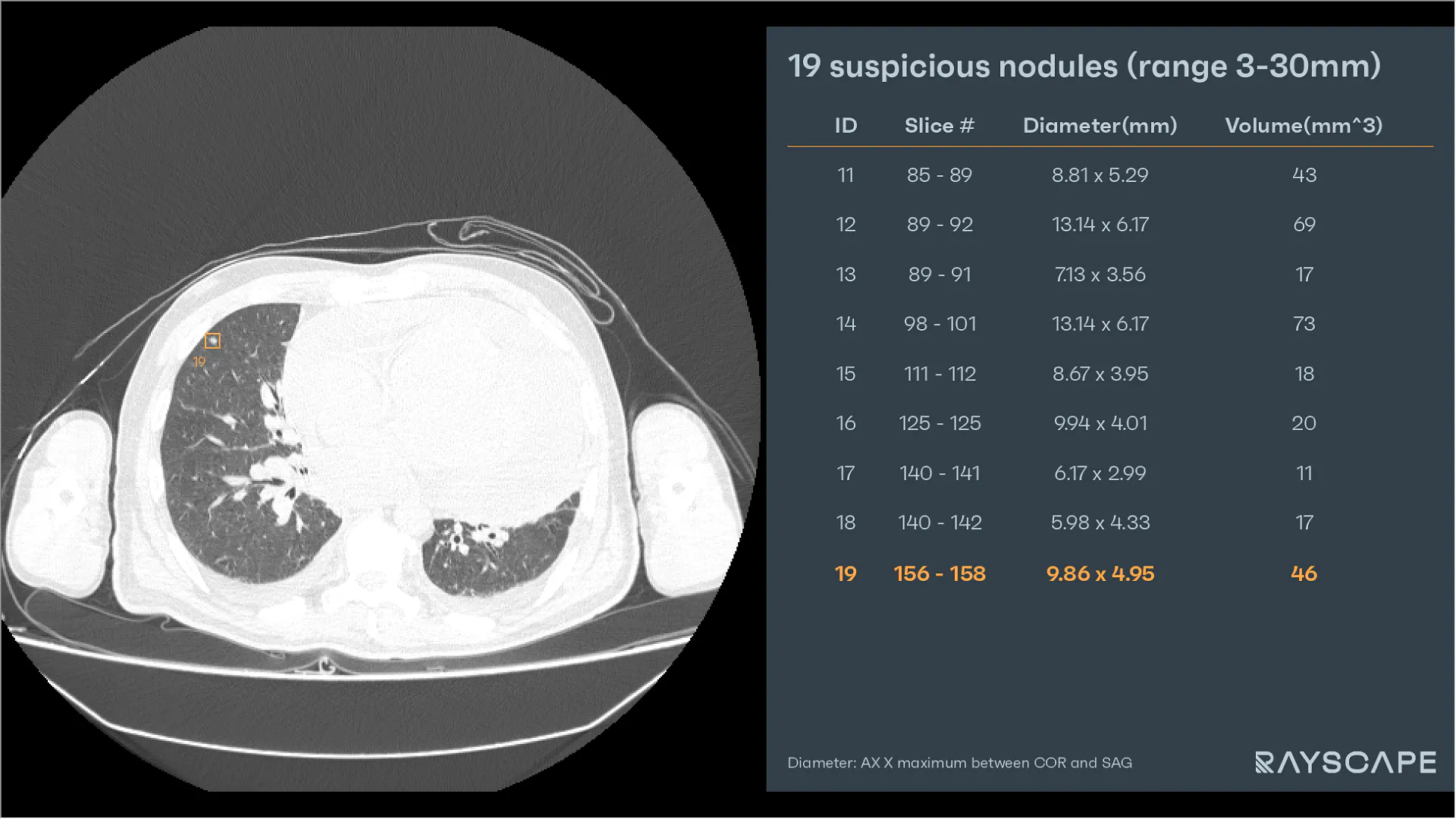
This time the patient accepted the computed tomography, and the scan confirmed the presence of multiple pulmonary nodules.
After the patient is presented with the possibility of additional exploration and treatment, he again refuses the doctors' advice for evaluation for possible bronchopulmonary cancer.
After some time, the patient presents himself again to the emergency department, this time with respiratory failure and he undergoes a new CT scan. The Rayscape application uses previous explorations to perform a comparative analysis.

Chest CT investigations demonstrate the dimensional increase of the existing nodules, the appearance of new nodules, but also the volumetric stationarity of the completely calcified nodules.

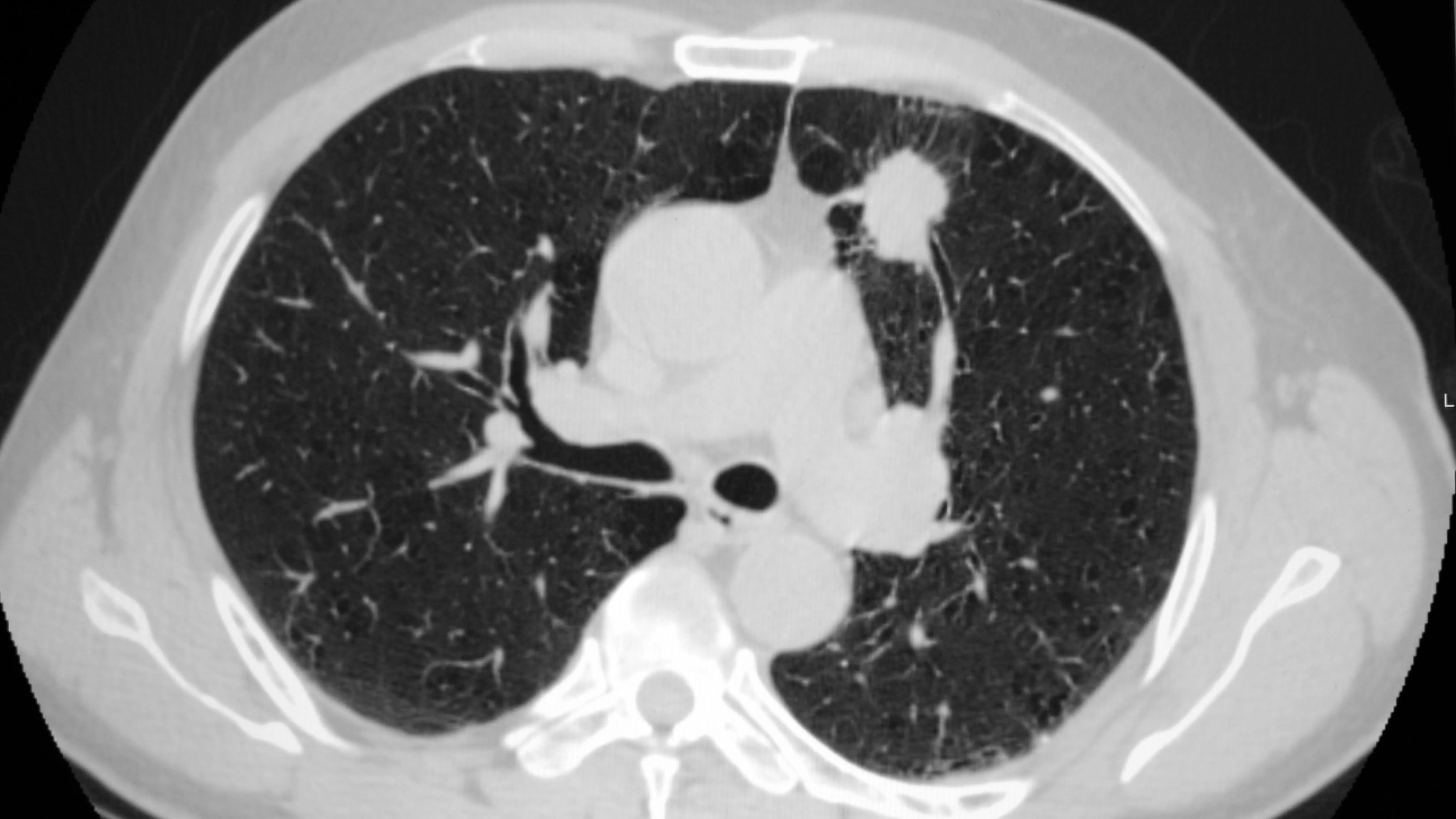
The main lesion shows significant and obvious growth - the reason why the radiologists chose to use Rayscape for the efficiency of the nodule comparison algorithm.

Following the Rayscape automatic analysis and the interpretations of the radiologists, the patient is directed further to the appropriate multidisciplinary team to undergo the necessary treatment.
This case demonstrates the importance of using advanced imaging tools such as Rayscape in the diagnosis and management of heart failure and lung conditions. The efficient comparison algorithm allowed for accurate tracking of the progression of the lesions, leading to prompt and effective treatment.
Discover how Rayscape works
integrate Rayscape AI into
your hospital's infrastructure
and improve both your
daily workflow and patients' experience.
