

AI comparative tool detects multiple nodular lesions
Lung nodules are a common radiological finding, and their management can be complex. Comparative analysis software is becoming an important tool in the evaluation of this type of finding, as it allows radiologists to automatically compare images from different time points, facilitating the identification of changes that may indicate the progression or regression of the nodule.
Early detection is crucial, as it increases the chances of successful treatment and improved patient outcomes. Rayscape enables radiologists to monitor changes in the size and appearance of pulmonary nodules over time, alerting them to any growth or changes that may indicate lung cancer.
Accurate diagnosis and staging of lung cancer are critical for selecting the appropriate treatment plan for patients. By automatically comparing images of lung nodules over time, the software can determine the growth rate and behavior of the nodule, differentiating between benign and malignant nodules.
Because of this, we are reducing the need for unnecessary tests. Without a comparative analysis tool, radiologists may order multiple tests and procedures to evaluate lung nodules that are stable or not. This not only increases healthcare costs but also exposes patients to unnecessary radiation and invasive procedures.
Next, we present a clinical case where our comparative analysis tool for lung CT played a crucial role in detecting a potentially malignant lesion.
A 65-year-old patient came to the hospital for an emergency cause. He was experiencing severe chest pain and shortness of breath and the medical team suspected a possible pulmonary embolism. To confirm the diagnosis, the patient underwent a lung CT scan, which revealed multiple lung nodules.
With the help of the Rayscape application, the radiologist identified:
- A 24/21 mm macronodule located peri-broncho-vascular/infrahilar in the left lower lobe.
- Several calcified pulmonary fibronodules with predominantly subpleural distribution, bilaterally.
In addition, during the CT examination, the doctor identified:
- Cardiomegaly and aorta with normal dimensions.
- Atherosclerotic plaques in the aorto-coronary arteries.
Although the medical team treated the patient for his emergency, they recommended that he undergo further testing to evaluate the lung nodules.

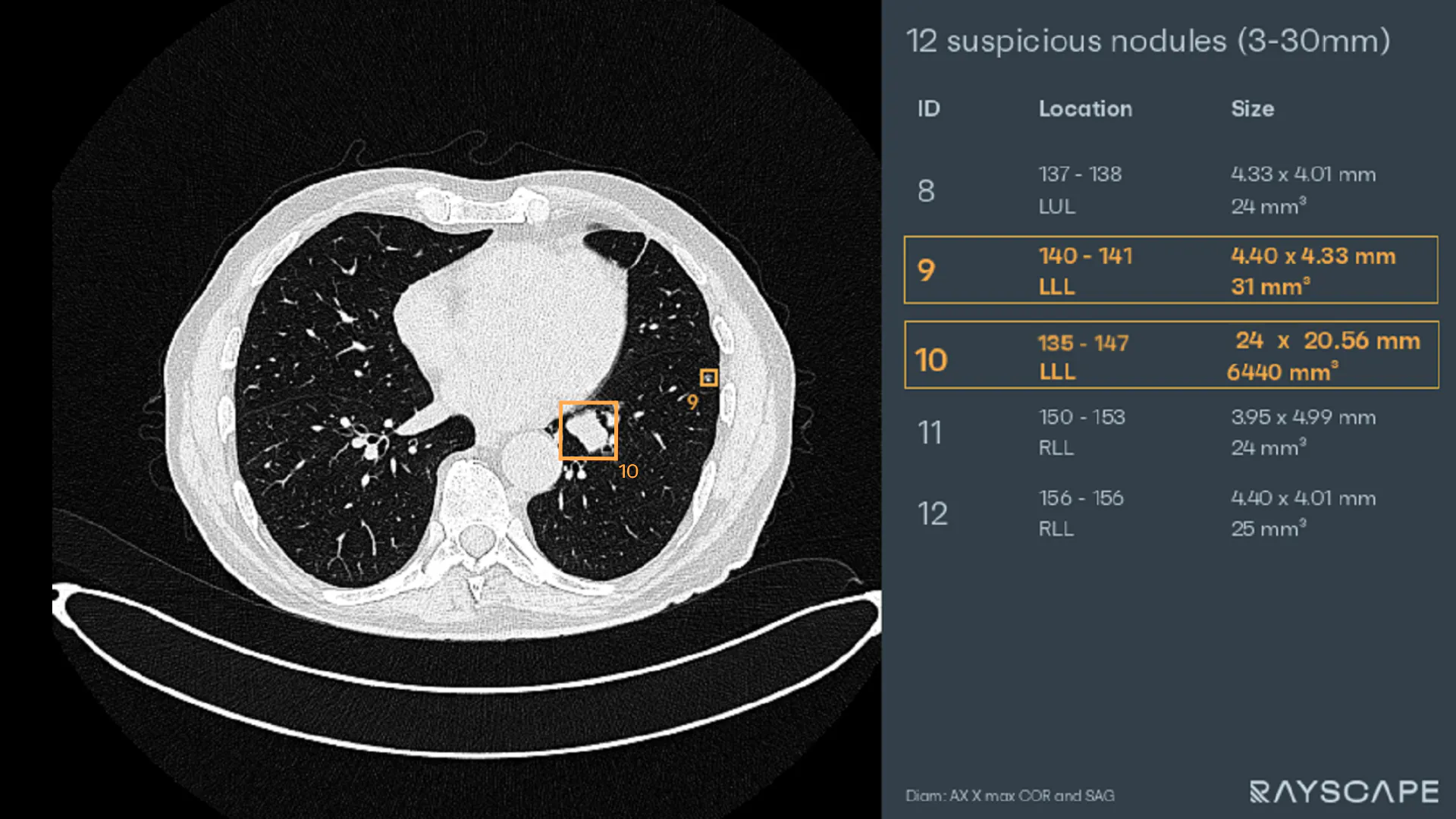
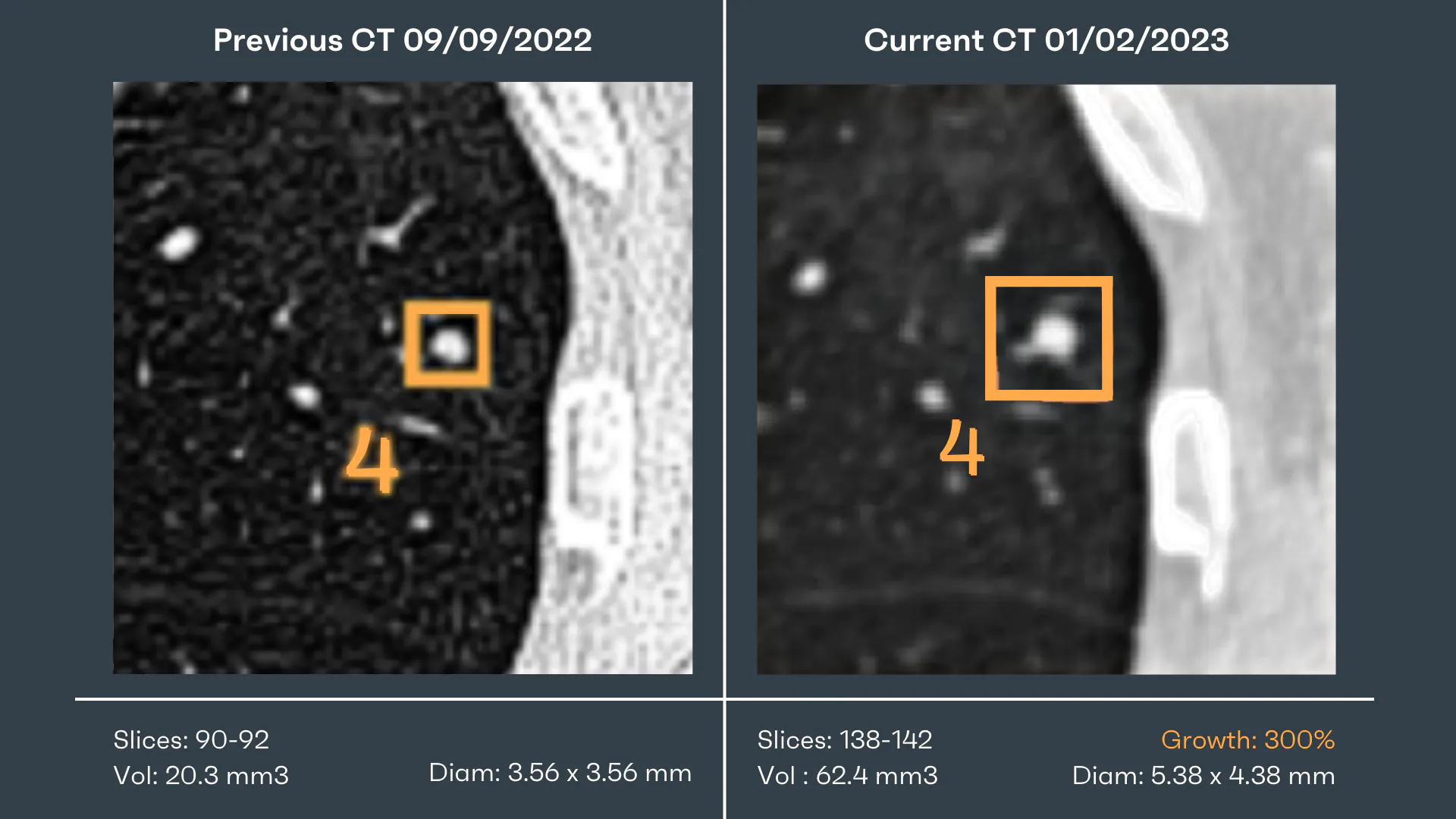
However, the patient could not come back for additional testing, and a few months passed. He returned to the emergency ward with pulmonary symptoms, including a persistent cough, fever, fatigue, and weight loss. Although the doctors initially suspected a case of pneumonia, they decided to perform a lung CT scan to confirm the diagnosis.
Thanks to Rayscape, the lung CT scan was automatically analyzed, and the comparison tool alerted the doctors about the growing lung nodules, suspected to be malignant lesions.
This time, the AI software identified:
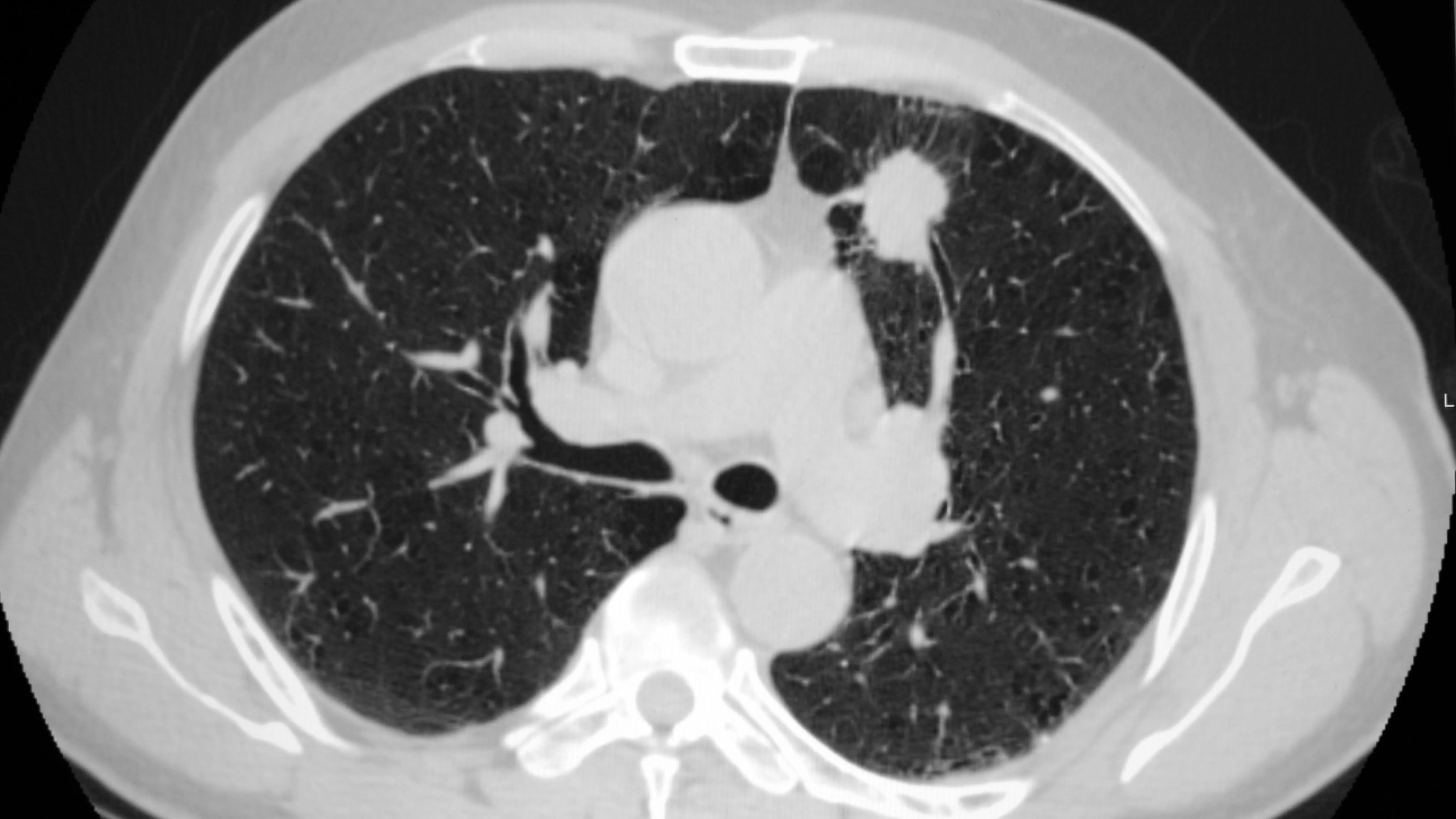
- A 34/33 mm peri-broncho-vascular infrahilar tissue macronodule with a malignant pattern, located in the left lower lobe, tangent to the pericardium, with a comparative size increase from the previous examination.
- Nodular lesions with a maximum diameter of 7mm, located in the right upper lobe, left lower lobe, and right lower lobe, increased in number and size compared to the previous examination.
- Several calcified fibronodules, millimetric in size, are predominantly located subpleural bilaterally.
In addition, during the CT examination, the doctor identified:
- Bilateral apical pleural thickening.
- Several mediastinal lymph nodes with a maximum diameter of 10mm.
This early detection enabled the doctors to diagnose the patient with lung cancer and provide him with appropriate treatment.
In this case, our comparative analysis tool was critical in detecting the potential malignant lesion, even when the patient forgot to come back for additional testing. Another important aspect to note in the application is the detection of new nodules appearing between explorations. As a result, we were able to provide timely and accurate diagnosis and treatment, ultimately improving the patient's outcomes.

Discover how Rayscape works
integrate Rayscape AI into
your hospital's infrastructure
and improve both your
daily workflow and patients' experience.
