

Acute Respiratory Insufficiency & Lung Metastasis: An AI approach
A 67-year-old male patient had been experiencing subtle neurological symptoms, including headaches, dizziness, and coordination difficulties, for several months. After a comprehensive evaluation, he was diagnosed with glioblastoma multiforme, an aggressive brain tumor. He underwent surgical resection followed by radiation therapy and was scheduled for adjuvant chemotherapy.
Two months after the brain tumor diagnosis, the patient presented with acute respiratory distress, characterized by severe shortness of breath, rapid breathing, and low oxygen saturation. Recognizing the urgency of the situation, the medical team promptly utilized Rayscape to aid in the diagnostic process.
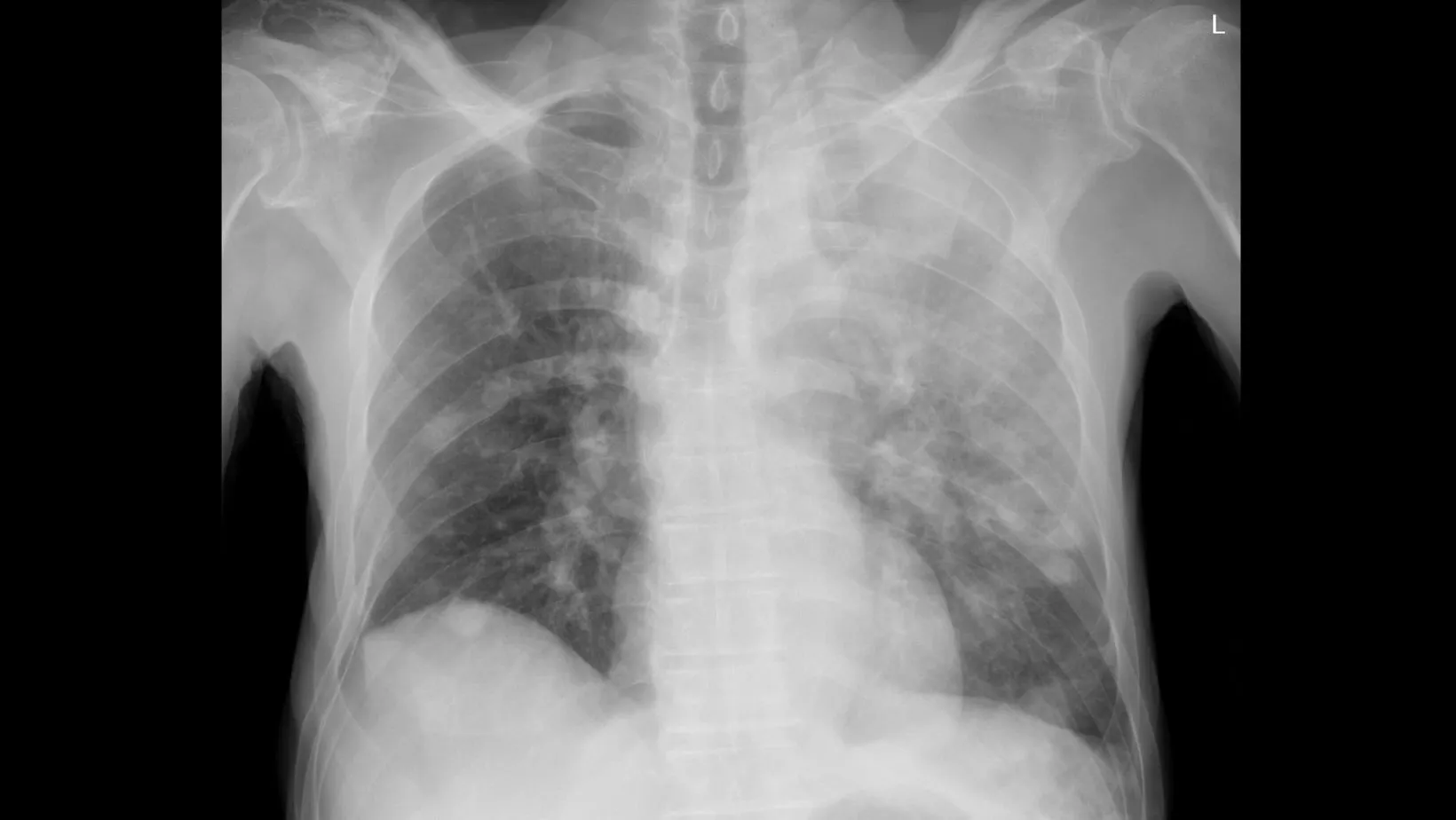
X-ray results
- Left-sided hilar and suprahilar opacity without clear demarcation in relation to the mediastinum associated with slight heterogeneous opacity in the upper two-thirds of the left hemithorax -suggestive of a pulmonary lesion with associated adjacent alveolar consolidation.
- Multiple well-defined micronodular and nodular lesions, up to approximately 16 mm in size, distributed bilaterally in both lung fields.
- Viciously consolidated fractures involving the posterior ribs: ribs IV to VII on the right side and ribs VI to VII on the left side.
- No evidence of pleural effusion.
Differential diagnoses may include primary lung malignancies such as lung adenocarcinoma or squamous cell carcinoma. Other potential differentials to consider include infectious processes such as fungal infections or tuberculosis.

Diagnostic Implications
The presence of possible pulmonary metastatic lesions indicated by the X-ray findings raised concerns about metastatic spread from the previously diagnosed brain tumor. Glioblastoma multiforme has a known propensity for distant metastasis, with the lungs being a frequent site for such metastatic lesions.
Considering the timeline between the brain tumor diagnosis and the onset of respiratory symptoms, along with the radiographic evidence of pulmonary nodules, the possibility of pulmonary metastases was highly probable. This information prompted the medical team to investigate the extent of metastatic involvement and devise an appropriate treatment plan.
Further Evaluation and Treatment
To further evaluate the pulmonary metastases and confirm the diagnosis, the medical team would recommend additional diagnostic tests, including:
- Computed Tomography (CT) Scan: This imaging modality provides detailed visualization of the lungs, enabling assessment of the number, size, and distribution of pulmonary metastases.
- Magnetic Resonance Imaging (MRI): Utilized to evaluate brain lesions and assess the response to prior treatment.
- Positron Emission Tomography (PET) Scan: This imaging technique helps identify potential metastatic sites beyond the brain and lungs.
- Biopsy: If necessary, a biopsy of one of the pulmonary nodules may be performed to obtain histopathological confirmation of metastatic involvement.
Treatment considerations would involve a multidisciplinary approach, involving neurosurgeons, oncologists, and pulmonologists. The treatment plan may include:
- Chemotherapy: Depending on the extent of metastasis, chemotherapy agents such as temozolomide or a combination of drugs may be administered.
- Stereotactic Radiosurgery: This precise form of radiation therapy focuses on targeting specific pulmonary metastatic lesions while minimizing damage to healthy lung tissue.
- Supportive Care: Palliative measures aim to alleviate symptoms, enhance the quality of life, and provide psychological support.
Close monitoring of the patient's response to treatment, regular imaging studies, and ongoing multidisciplinary discussions are crucial to guide further management decisions and optimize care.
The integration of advanced AI software like Rayscape facilitated the identification of pulmonary metastases, enabling the medical team to promptly address the patient's acute respiratory insufficiency. This collaboration between medical expertise and technological innovation played a pivotal role in providing accurate and timely patient care.

Discover how Rayscape works
integrate Rayscape AI into
your hospital's infrastructure
and improve both your
daily workflow and patients' experience.
