

Advancing Chest X-ray AI Reporting with Rayscape and LLM
Artificial Intelligence has changed radiology forever by helping clinicians detect abnormalities faster and with greater precision. But identifying a lesion is not the same as communicating it. The real value of AI emerges when those findings become part of the radiologist’s workflow — structured, consistent, and ready to report.
Rayscape CXR’s new update bridges that gap. It transforms AI-detected findings on X-rays into written, structured reports that radiologists can review, edit, and finalize in seconds.
From image to words — we are going beyond detection
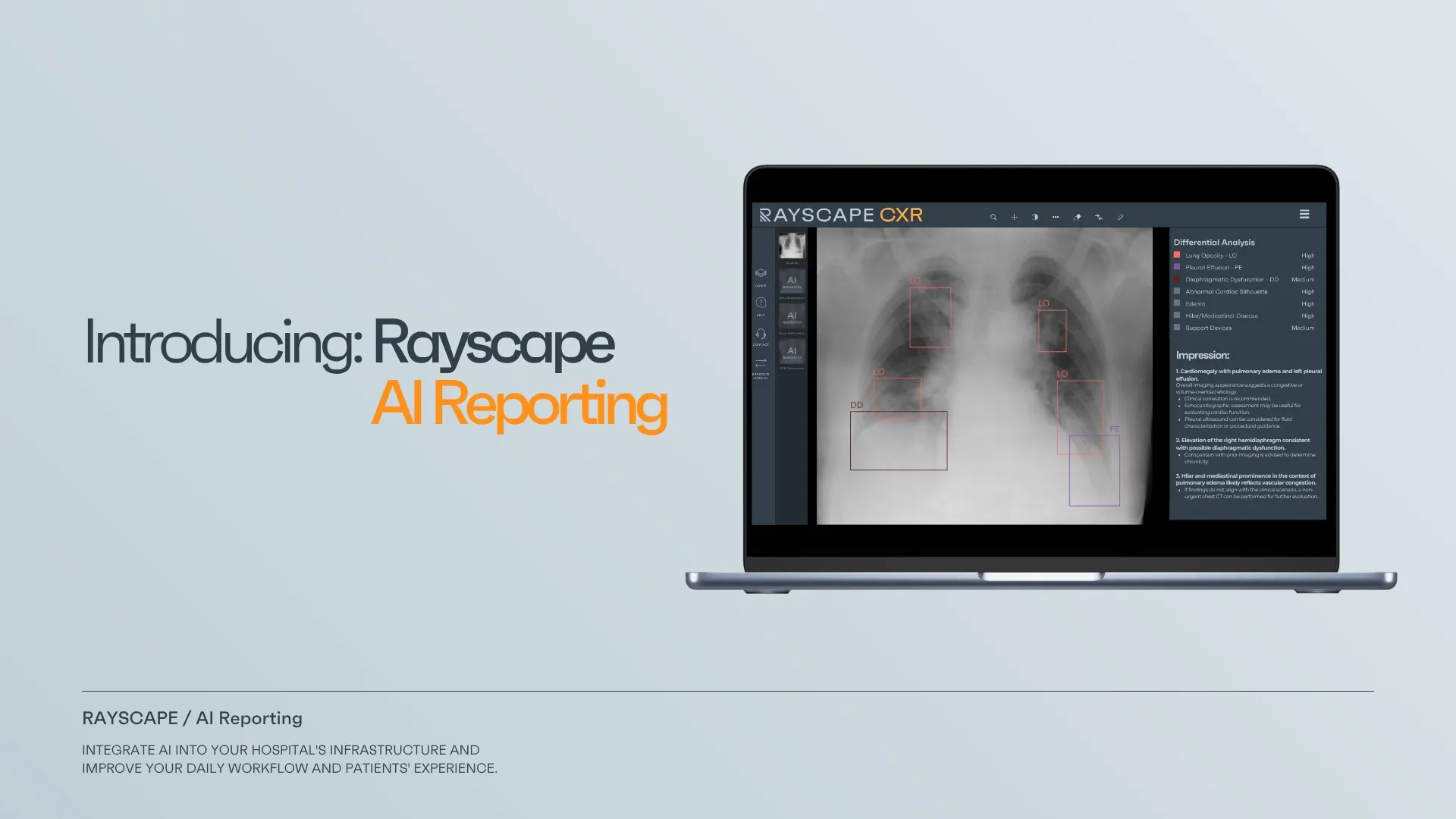
Each radiological report tells a story. The findings are its vocabulary, the structure, and its grammar. Until now, AI tools have supported the first step — detection — but stopped short of the narrative itself. In real clinical work, no finding exists in isolation. A patch in the lung may echo cardiac changes; a rib fracture may correlate with pleural effusion; a shadow may tell a systemic story. Radiologists think in connections — they interpret patterns that cross anatomical and physiological boundaries. That’s what differentiates diagnosis from pattern recognition.
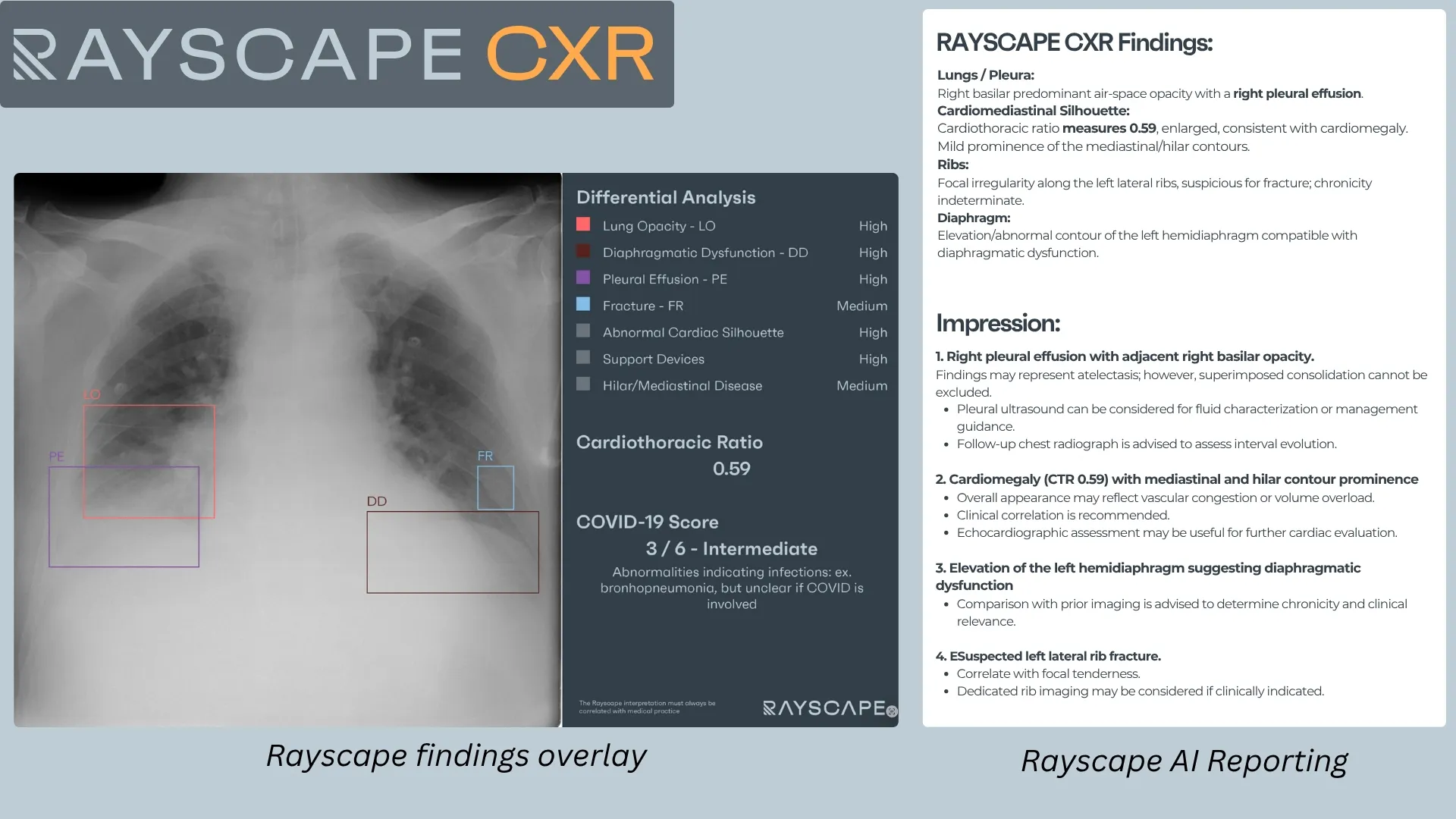
At Rayscape, we wanted to change that. Now, Rayscape CXR can automatically generate a draft report based on detected findings, using standardized terminology and logical grouping. When the radiologist reviews the case, the system displays both the AI Findings — interactive markers on the image — and the corresponding AI Report, written in clear, clinically aligned language. This text can be seen in our web-viewer or integrated in the RIS/HIS through HL7 communication.
AI doesn’t replace radiologists — it writes with them.
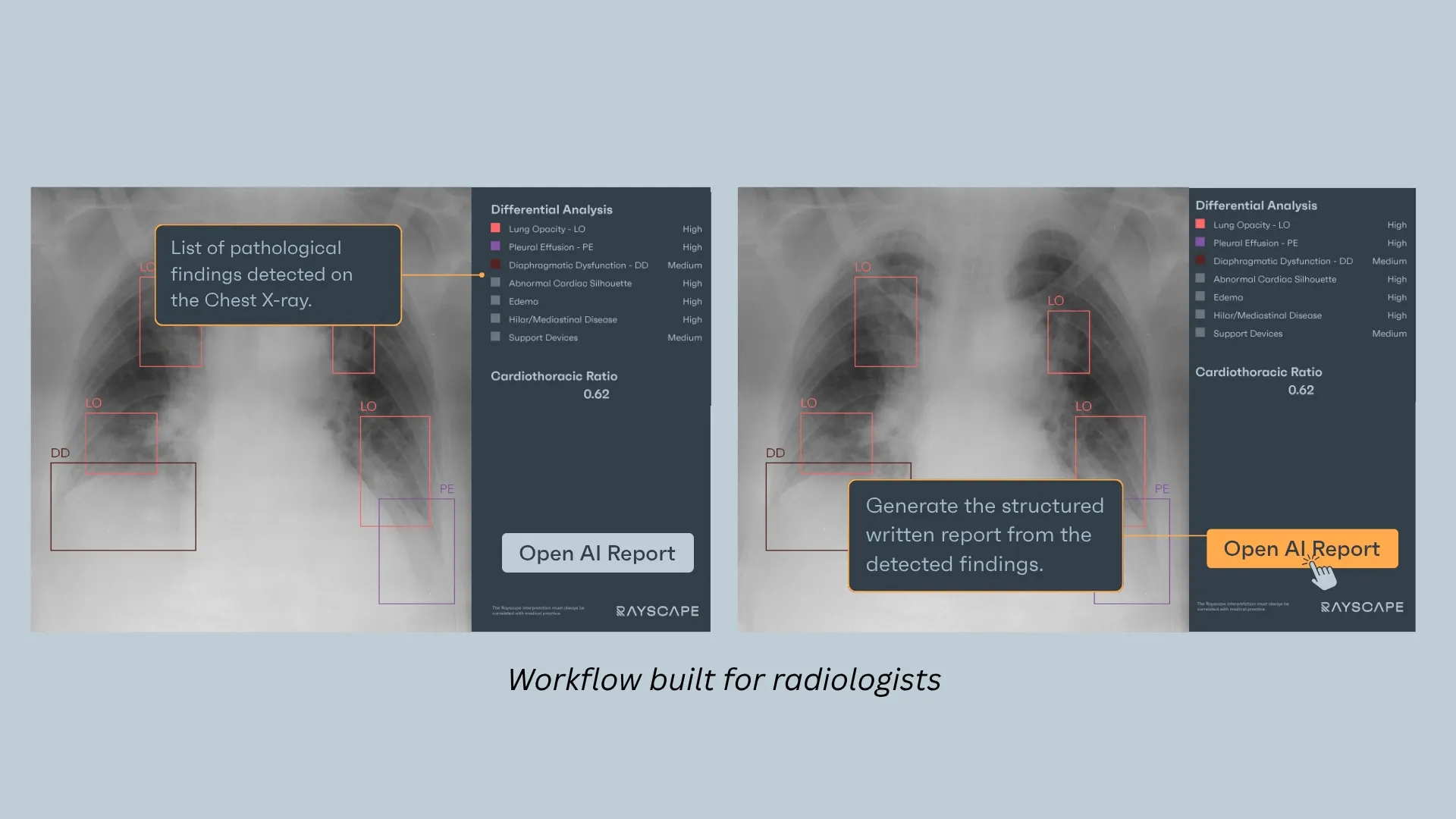
The experience is seamless.
- The AI system automatically detects pathological findings on the X-ray.
- Each marker and pathological finding corresponds to a specific region of interest.
- After reviewing the findings, the radiologist can open the written draft — already structured, standardized, and ready for final validation.
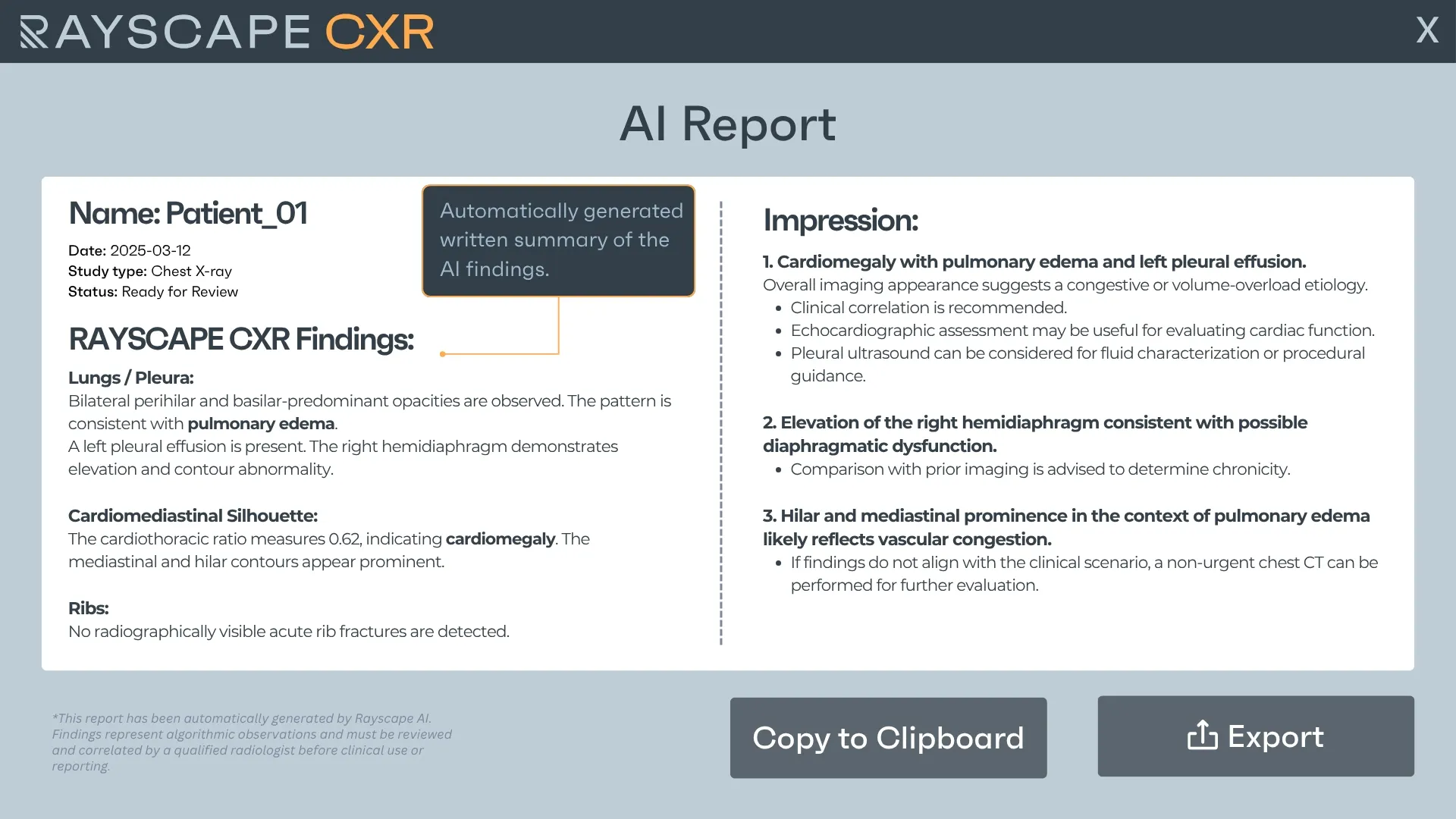
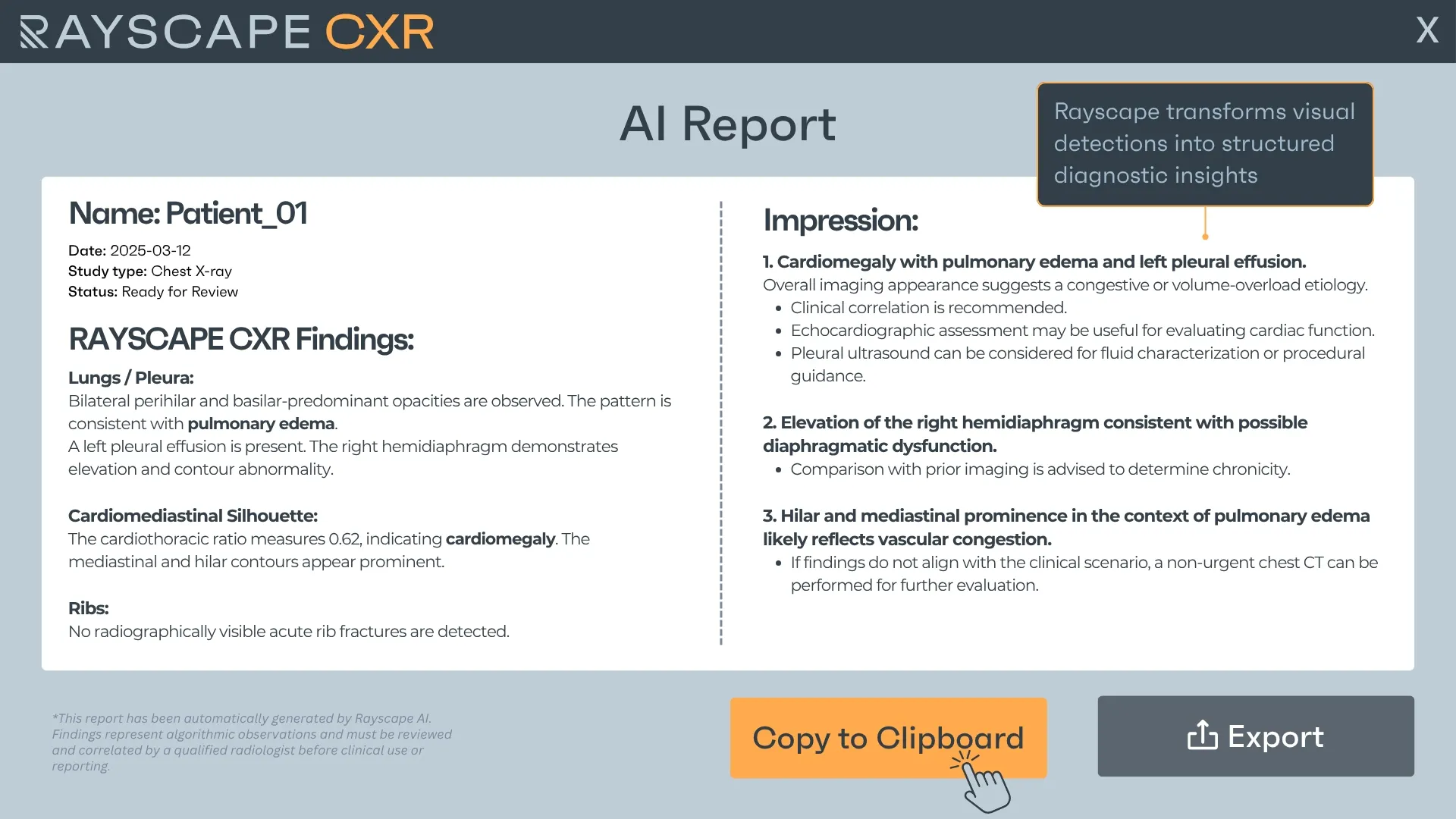
The result: faster reporting, consistent phrasing, and less manual effort. Rayscape remains true to its principle — assistive, not authoritative. The AI never replaces a radiologist’s voice. It saves time, ensures clarity, and gives doctors more bandwidth for complex reasoning.
Why it matters
Radiologists worldwide face the same challenge: high imaging volumes, time pressure, and a growing need for consistency. In many hospitals, one specialist may read hundreds of X-rays per day, often juggling multiple systems and templates.
By generating a written draft, Rayscape helps reduce that cognitive and administrative load. Reports become faster to complete, easier to standardize, and more coherent across teams.
Consistency is not just convenience — it’s clinical quality. When reports follow a uniform structure, communication with referring physicians improves, audits become simpler, and follow-up comparisons gain reliability. For large hospital networks, this translates to tangible diagnostic and operational benefits.
Every minute saved is a minute gained for patient care.
Built on privacy and performance
Rayscape CXR’s LLM Reporting follows the same architecture as all Rayscape modules. Integration with PACS and RIS and HIS systems remains secure and seamless — the new feature can be activated within existing workflows without extra infrastructure.
Part of a Larger Evolution
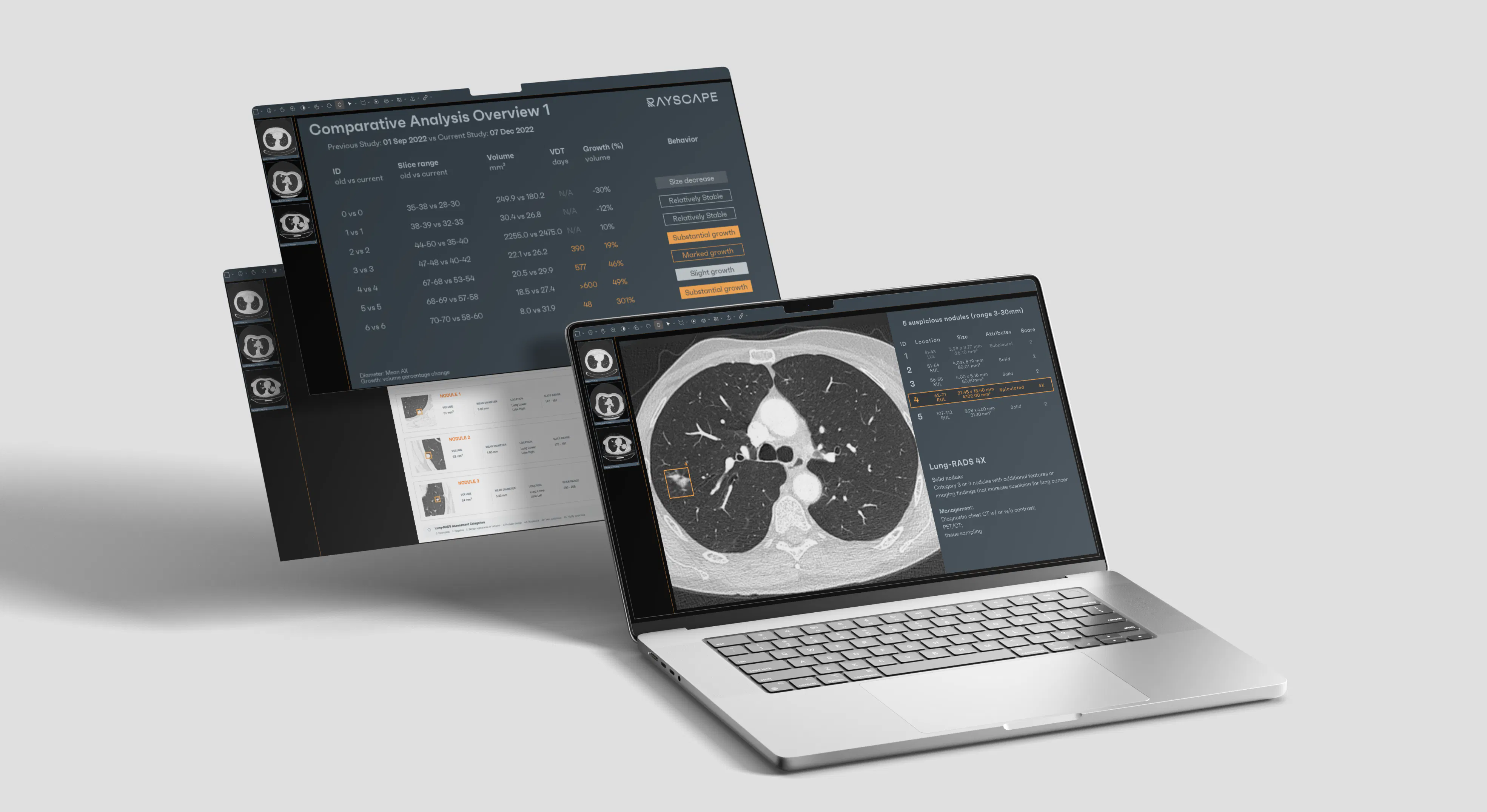
Rayscape’s trajectory has always followed one guiding idea: AI should evolve alongside radiologists, not ahead of them. From the first versions of Rayscape CXR — capable of detecting over 140 radiological findings — to the Rayscape Lung CT - our oncology model for lung nodule management, every step has expanded the AI’s comprehension of the human body.
Rayscape CXR AI Reporting using LLM now connects these capabilities into a full diagnostic loop: Detection → Description → Report.
Availability and Next Steps
The new Chest X-ray AI Reporting module is currently in closed release with select partners and will be gradually introduced into the Rayscape ecosystem. Until full deployment, visitors to the Rayscape Web Demo can explore the existing CXR and Lung CT solutions and preview this upcoming capability by booking a one-to-one demo presentation.
The future of diagnostic intelligence is already taking shape — structured, connected, and written.
Explore Rayscape’s AI solutions, see the workflow in action, and discover how Written Intelligence brings reporting and detection together.
Contact us and get your demo today.
Discover how Rayscape works
integrate Rayscape AI into
your hospital's infrastructure
and improve both your
daily workflow and patients' experience.
