

RSNA 2025 Wrap-up: Imaging the Individual
Chicago welcomed us with a powerful vision this year, one that places the patient at the center of every technological advancement. RSNA 2025's theme emphasized the important role radiologists play in precision medicine, focusing on diagnostic precision, improved outcomes, and equitable, high-quality care for all. From the opening plenary to the bustling AI Showcase floor, one message resonated clearly: we've moved beyond experimentation. The question is no longer whether AI works, but how it integrates, scales, and delivers lasting impact across diverse clinical settings.
Precision medicine takes center stage: from population to person
RSNA 2025 marked a defining inflection point where the focus shifted from what's coming next to what truly scales. The industry has transitioned from pilot projects to sustainable implementations, where success is measured by real-world integration and measurable clinical impact. This year's theme embodied that shift, spotlighting the move from population-based care to individualized diagnostic insights that connect directly to each patient's unique journey.
Dr. Kate Hanneman , chair of the RSNA Annual Meeting Program Planning Committee, highlighted compelling science abstracts showcasing photon-counting CT for functional imaging and radiation dose reduction, AI-enhanced lesion detection, opportunistic imaging for cardiovascular and metabolic risk prediction, and theranostics. The conference made it clear that imaging is no longer viewed only as a diagnostic checkpoint. It has become a driver of individualized insight, with imaging biomarkers, radiomics, and AI-assisted diagnostics enabling radiologists to provide personalized care that was impossible just a few years ago.
Throughout McCormick Place, over 660 companies converged in more than 415,000 square feet of exhibit space, with the AI Showcase alone featuring 228 exhibitors across 45,000 square feet—the largest radiology AI exhibition ever assembled. Major players like GE HealthCare , Siemens Healthineers , Philips Imaging , and Canon Medical Systems Corporation showcased fundamental shifts in imaging capabilities, all aligned with the broader vision of precision, patient-centered radiology.
Rayscape's journey at RSNA 2025: beyond the lungs
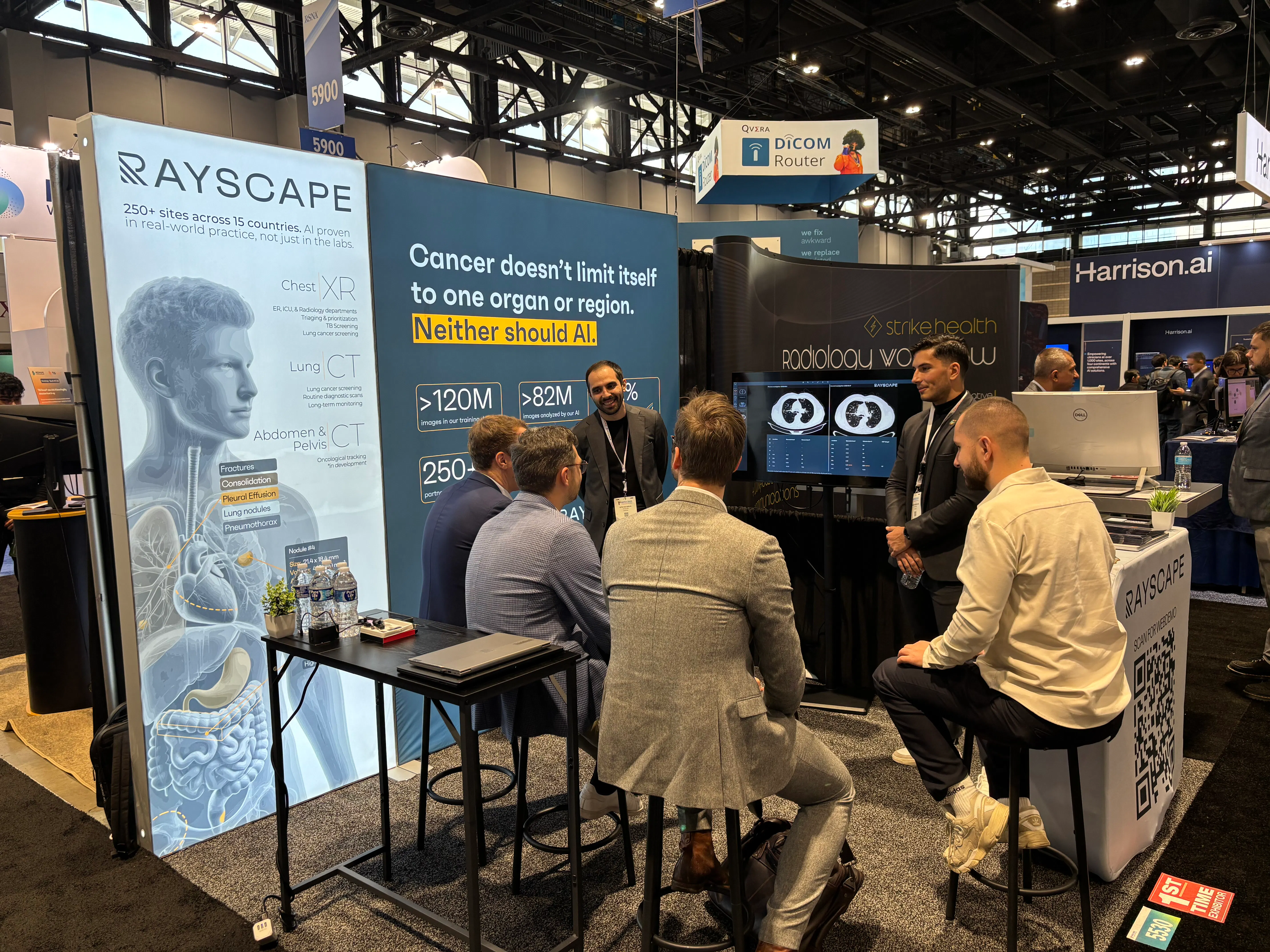
For Rayscape, RSNA 2025 represented a significant milestone in our evolution. After scaling across Europe, this was our first full booth, where we announced our U.S. expansion and gave a glimpse of the new products we’ve been building.
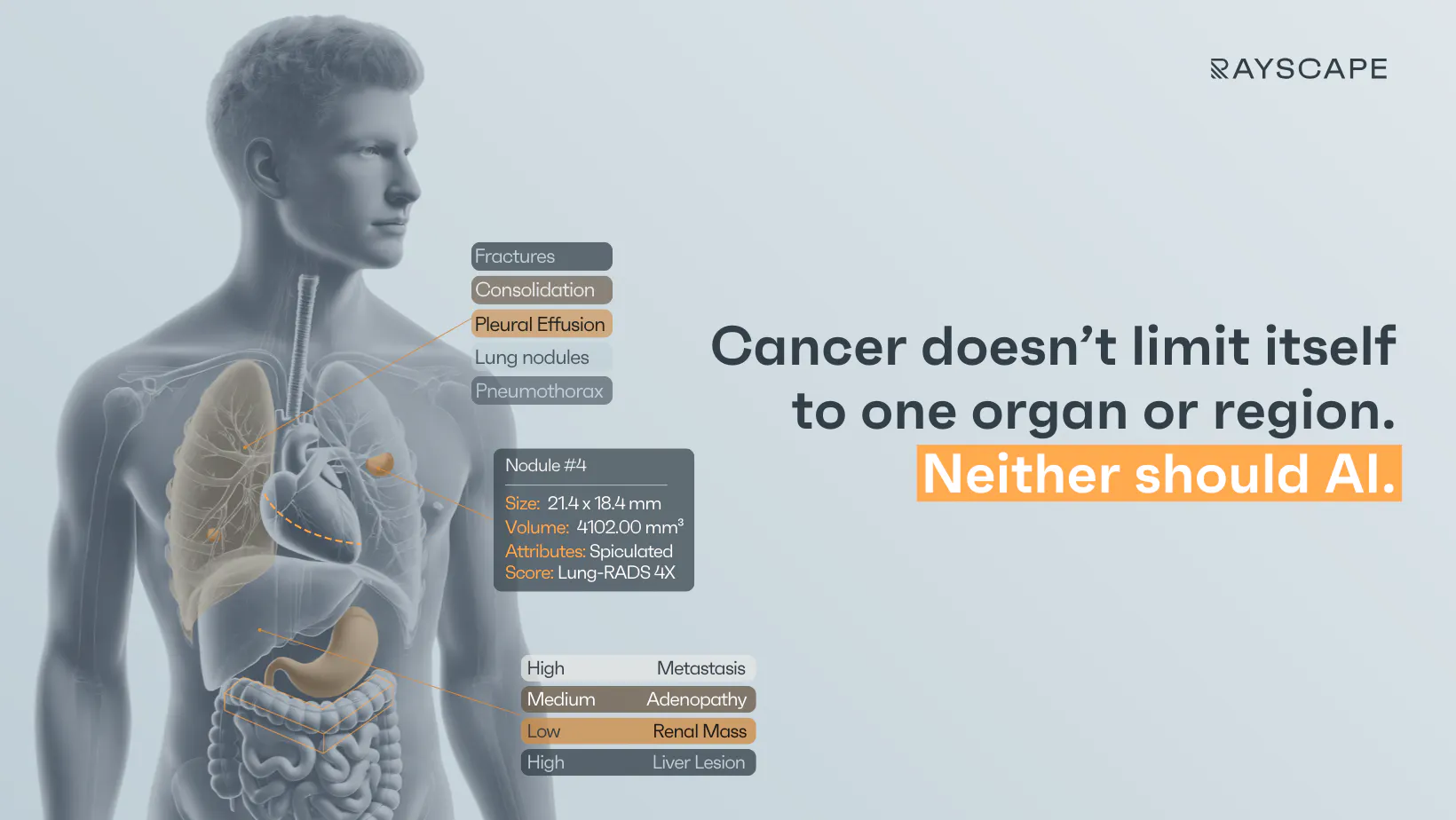
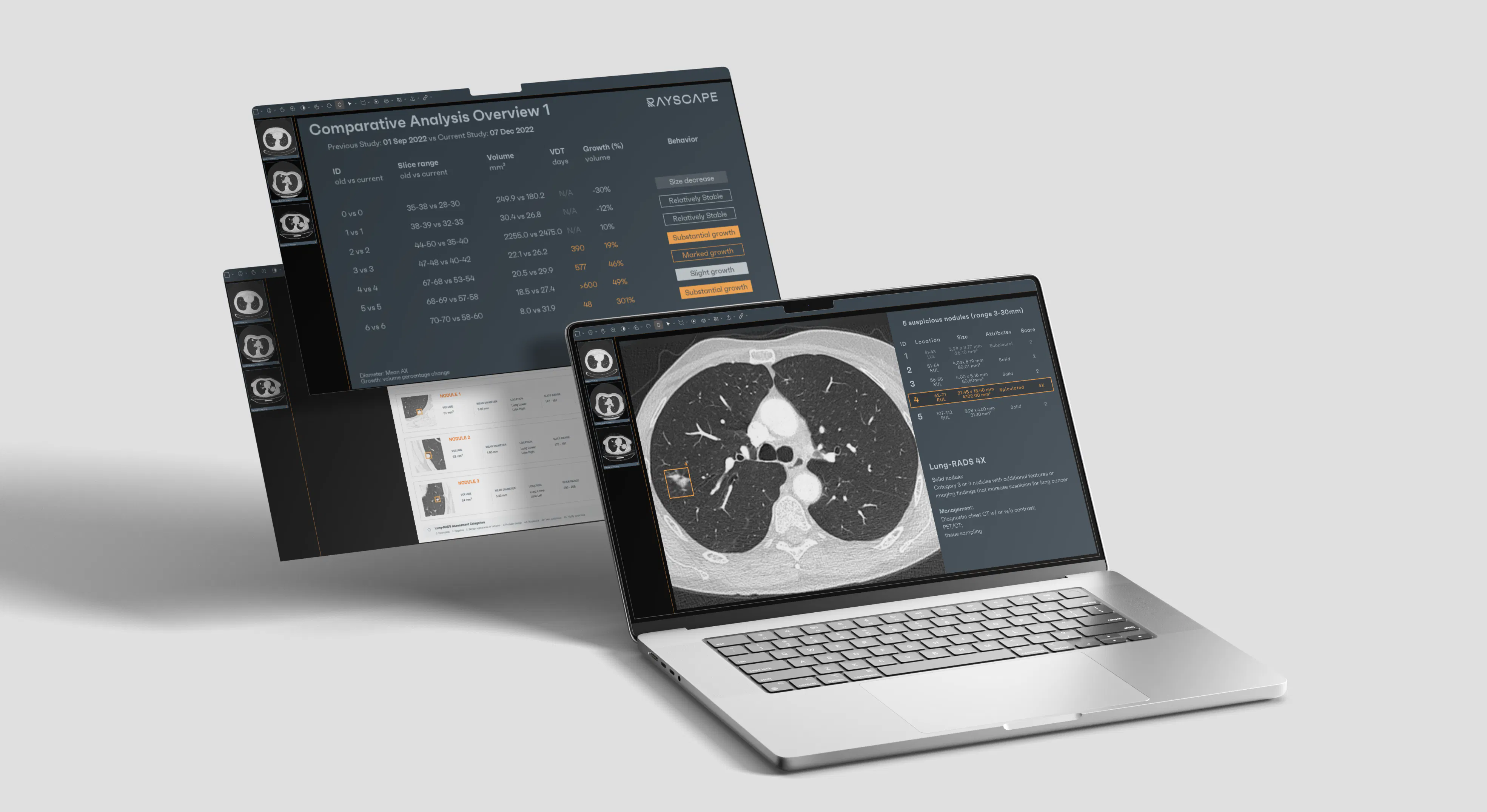
Our chest portfolio has gained strong traction in the EU, supporting ER, ICU, and radiology workflows on CXR, and powering screening, incidental findings, and longitudinal oncology follow-up on chest CT. After processing hundreds of thousands of studies and learning alongside our users, we came to Chicago to share what’s next—and how we’re turning those real-world insights into the next generation of clinically useful AI.
The booth no. #5530 became a convergence point for conversations that went far beyond "Can AI do this?" to "How do we make AI work reliably across oncologic imaging ?" The discussions reflected maturity in the field: radiologists are no longer asking about AI's potential but engaging with its complexities, challenges, and real-world implementation requirements.
What we've learned from Rayscape CXR and LungCT has been invaluable: not just algorithmic performance on benchmarks, but reliability in production, interpretability in clinical practice, and seamless integration into existing workflows. Principles like volumetric reasoning, multi-phase integration, longitudinal tracking, and workflow-embedded detection form the foundation of our next phase.
From thoracic imaging to oncology-focused products
At #RSNA2025, we offered an early look at our research direction: extending these proven thoracic imaging capabilities to comprehensive thoracic, abdominal, and pelvic oncologic detection. We know the anatomical complexity escalates dramatically beyond the chest. Multiple organs with overlapping densities that coexist in proximity, enhancement kinetics that shift continuously across imaging phases, motion artifacts, partial volume effects, and normal anatomic variants all conspire to hide malignancy from human perception.
This development direction reflects a simple reality: the future of oncologic AI is no single-organ, single-pathology detection. It is a comprehensive, multi-region analysis that mirrors how radiologists actually read scans, synthesizing findings across anatomical compartments, integrating temporal data, and providing decision support that fits naturally into existing workflow patterns.
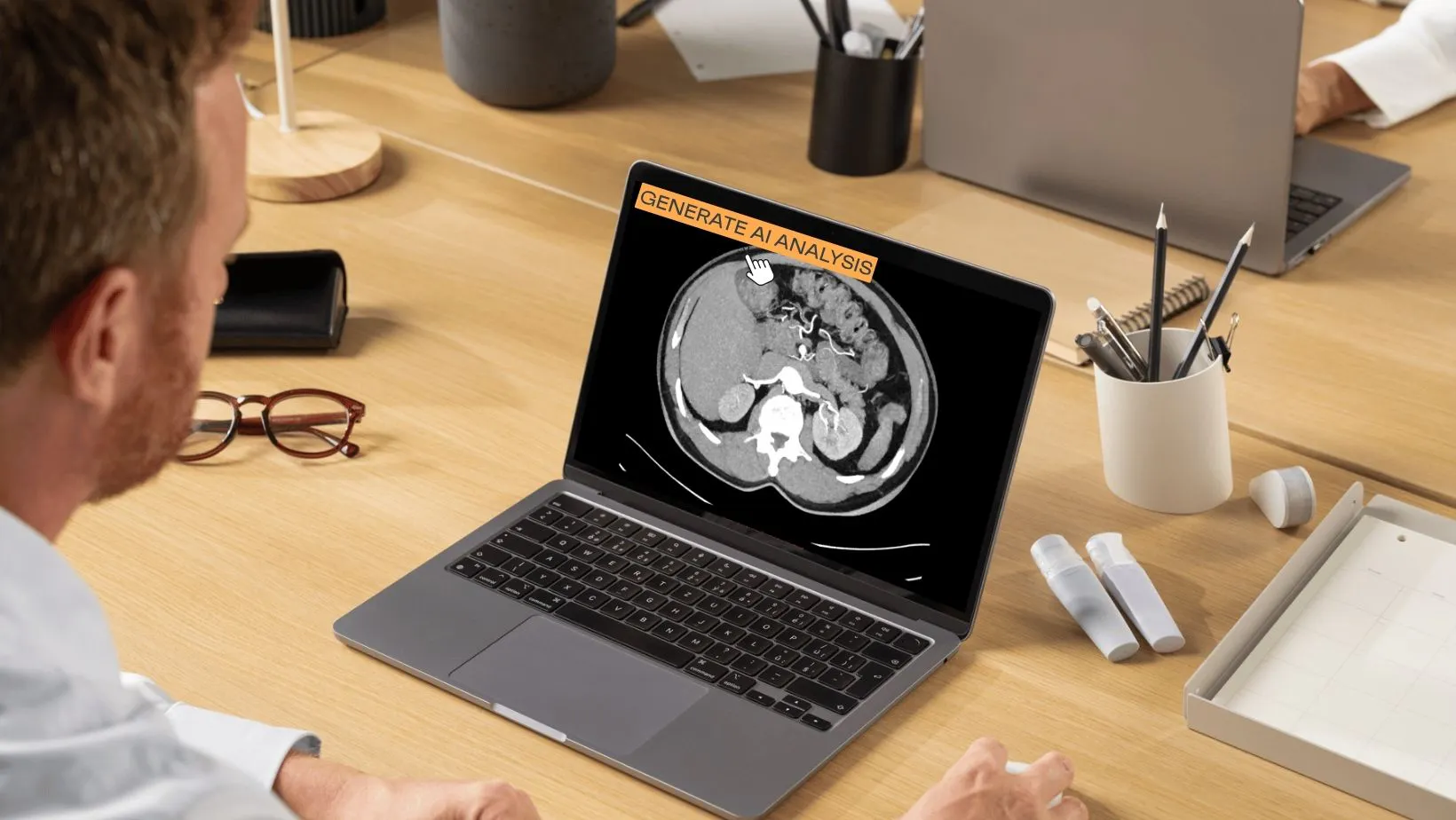
For institutions and clinical teams interested in how advanced AI can support their oncologic imaging workflows, we welcome conversations. At Rayscape, we have always developed our technology in close collaboration with practicing radiologists, and that approach will define this next phase of work. If you are exploring AI solutions for abdominal and pelvic oncology, or if you are interested in learning more about our current and future development roadmap, we would be happy to discuss where our work intersects with your clinical needs. Drop us a message at [email protected], and we’ll be in touch!
Thank You, Chicago
RSNA 2025 will be remembered for demonstrating that precision medicine in radiology is no longer aspirational, but operational. Technology exists, and the question now is implementation: how to scale these tools responsibly, how to ensure they work reliably across diverse populations, and how to integrate them so seamlessly that they enhance rather than burden clinical practice.
To everyone who shared our vision at RSNA, who engaged in thoughtful discussions at our booth, and who continues to push the boundaries of what AI can achieve in oncologic imaging, thank you. We look forward to continuing this journey together, advancing the field one clinical validation at a time.
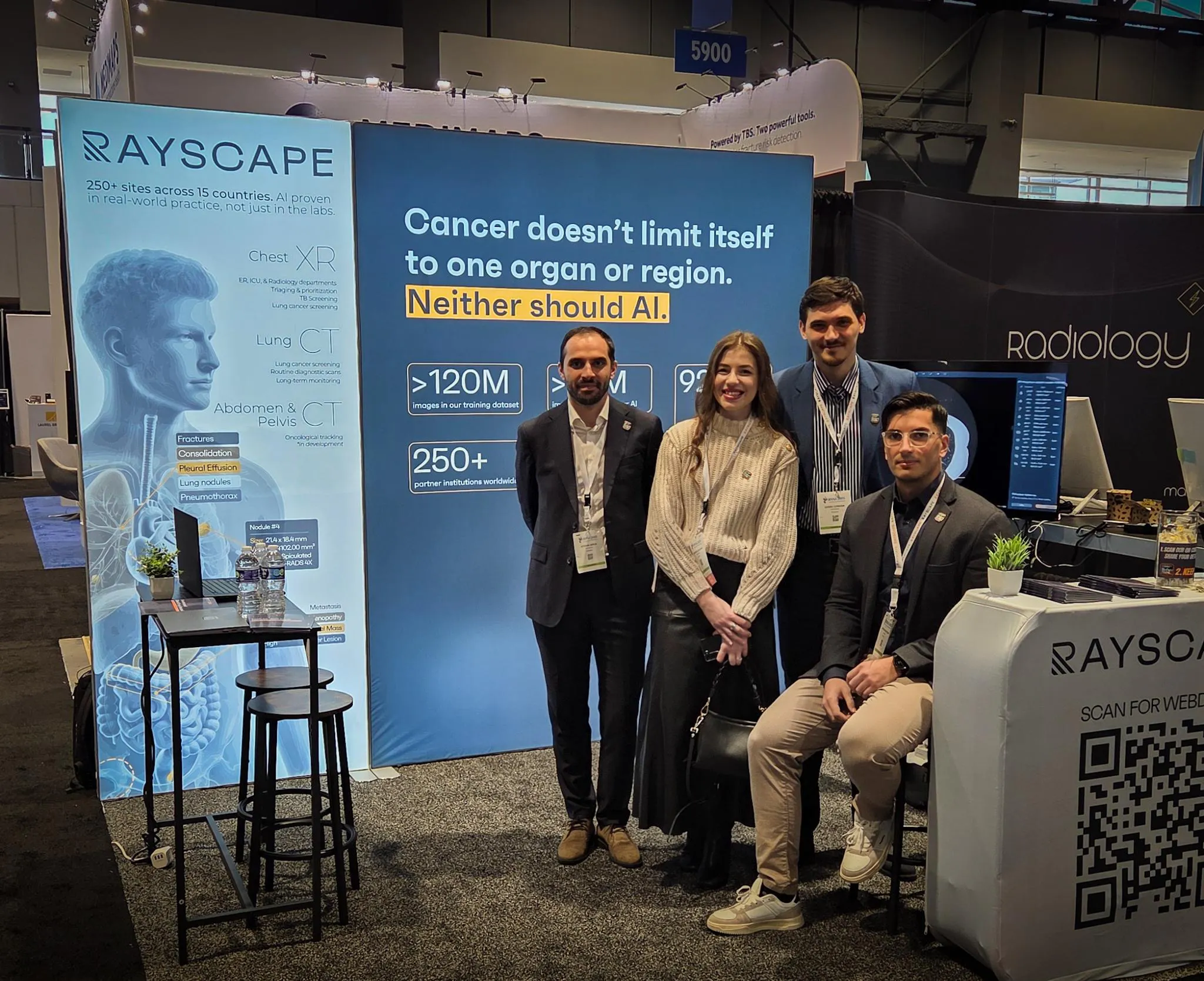
See you at RSNA 2026!
If you didn’t get the chance to stop by our booth but want to see what we’re building, contact us and schedule a product demo.
Discover how Rayscape works
integrate Rayscape AI into
your hospital's infrastructure
and improve both your
daily workflow and patients' experience.
