Abstract
A recent study published in The Lancet Digital Health evaluated the performance of twelve computer-aided detection (CAD) products for tuberculosis (TB) from chest radiographs in a high TB and HIV prevalence setting in South Africa. Among the evaluated products, Rayscape (formerly XVision) demonstrated high sensitivity, placing it in the top tier of detection power. The study highlighted the importance of tailored threshold settings for different populations to optimize diagnostic efficiency.
Methods
The study involved evaluating 12 CAD products from various international companies on a sample of 774 participants, including 258 bacteriologically positive cases. The primary outcome was to compare the accuracy of these products using the area under the receiver operating characteristic curve (AUC) against microbiological evidence. Subgroup analyses were conducted based on age, gender, HIV status, previous tuberculosis history, symptoms presence, and current smoking status.
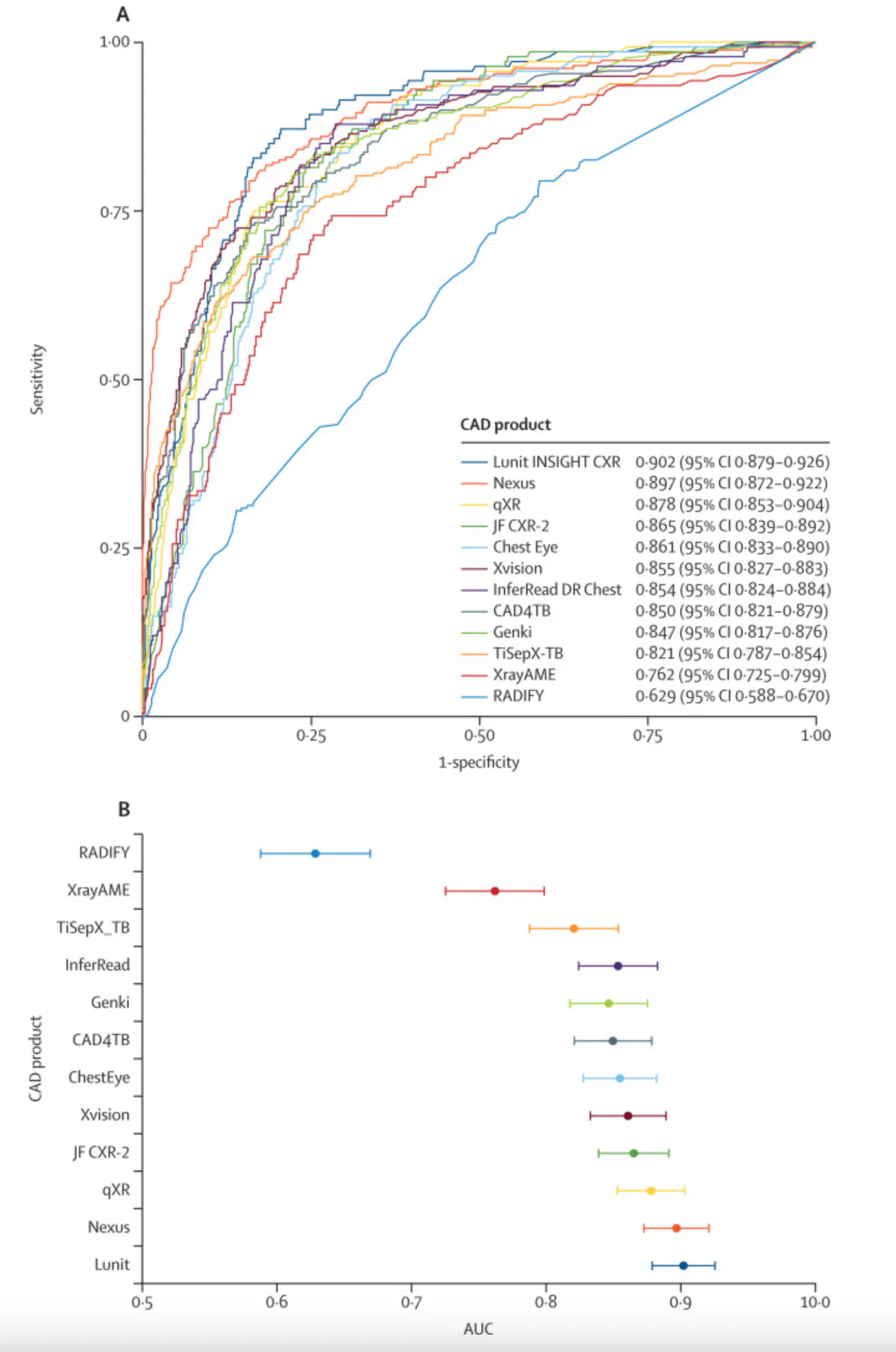
Figure: The receiver operating characteristic curves against the composite microbiology reference standard (A) and the AUCs (B) of 12 commercially available CAD products
Results
Five CAD products achieved high sensitivity, with Rayscape among them. The threshold analysis showed how different programmatic criteria affect the choice of threshold score and how these scores vary between products and sub-populations. The study revealed significant demographic differences between bacteriologically positive and negative individuals, highlighting the need for tailored threshold settings to reduce unnecessary confirmatory testing.
Conclusions:
- Using the same threshold for various products will result in different sensitivity, specificity, and chest X-ray abnormal rates.
- No significant difference was noted in people living with HIV compared with HIV-naive populations in product AUCs, necessitating further evaluations in these and other populations.
- Several context-specific factors should be considered when deciding on which product and threshold to use, including population screened, diagnostic test availability, and comorbidities.
This study underscores the critical role of context-specific factors and tailored threshold settings in optimizing the performance of CAD products in TB screening programs, enhancing diagnostic accuracy and efficiency.
Excited to explore further? Contact us today!