Abstract
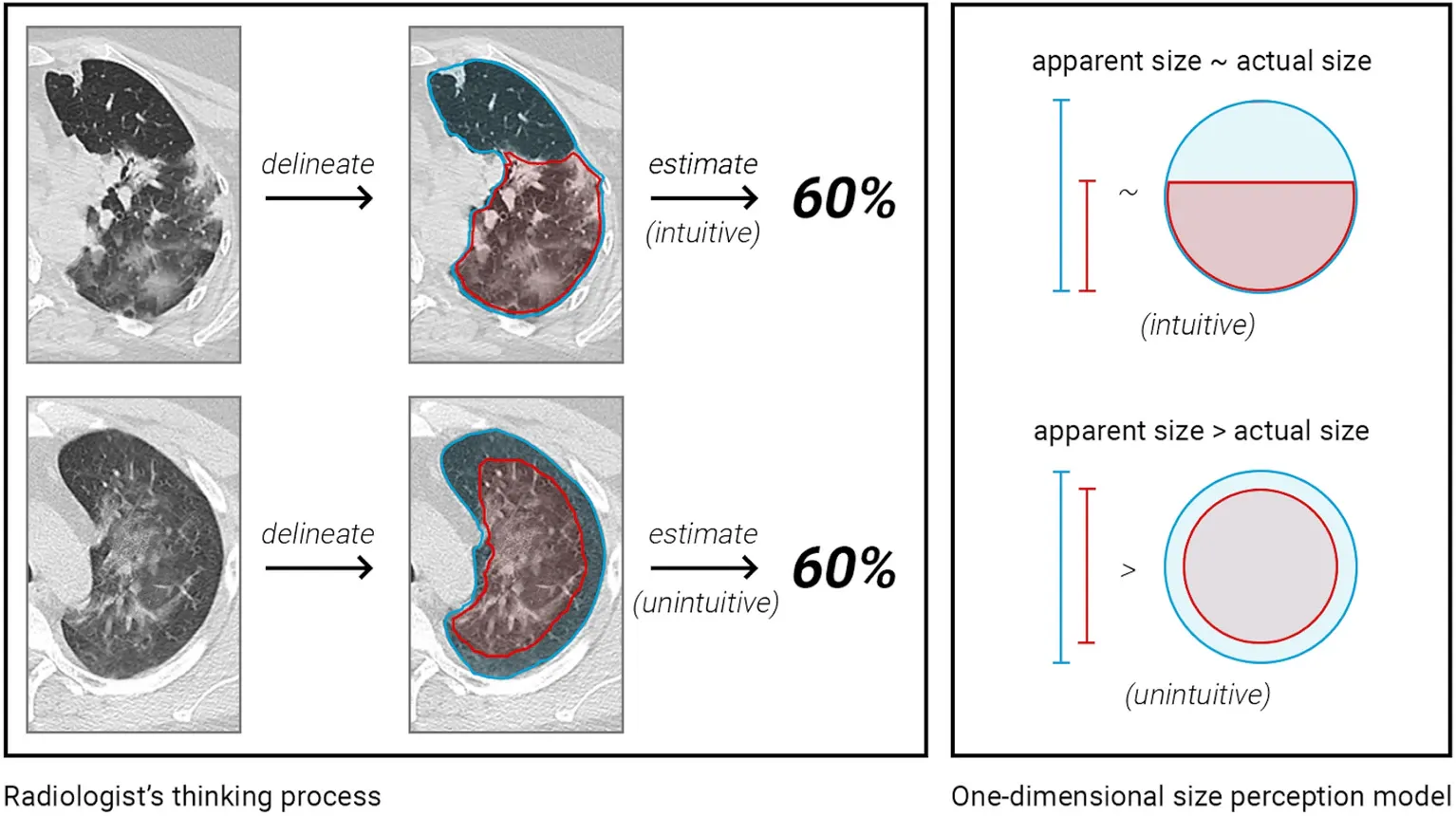
This study explores biases in COVID-19 pneumonia quantification via chest CT and assesses AI's role in mitigating them. Radiologists consistently overestimate lung involvement, as evidenced by a survey and retrospective analysis. A randomized trial with AI shows a significant reduction in overestimation errors, underlining AI's value in minimizing human biases.
Methods
The study involves three main experiments. The first employs a synthetic experiment with 40 radiologists, assessing their estimation of lung involvement ratios in simulated CT slices. The second is a retrospective analysis of CT studies from 109 patients, confirming the presence of overestimation biases in real COVID-19 cases. The third is a randomized clinical trial with AI decision support, involving 76 CT studies from COVID-19 patients, comparing outcomes between the AI analysis arm and the control arm without AI assistance.
Results
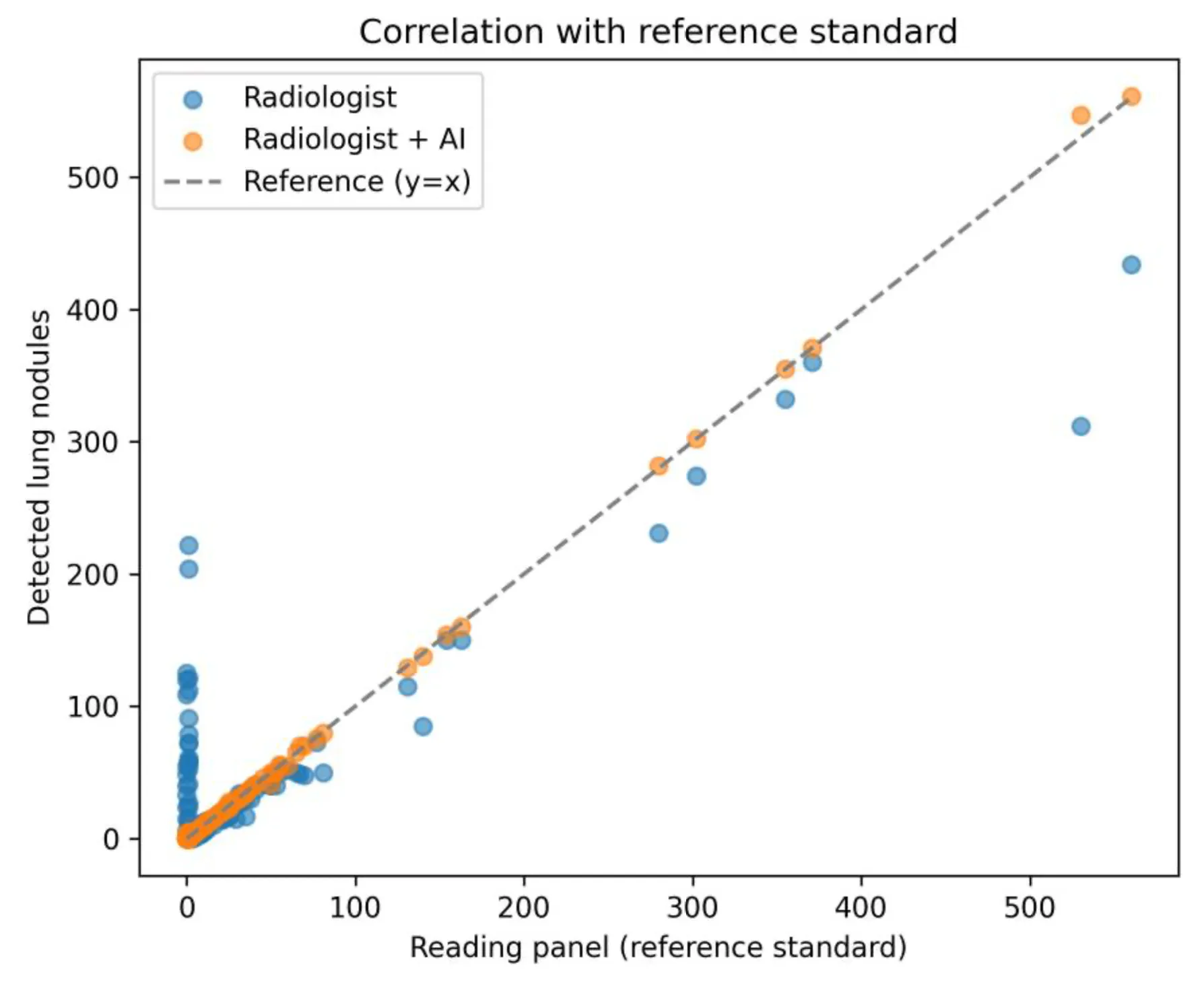
Radiologists consistently overestimate lung involvement in synthetic and real CT scenarios. In the retrospective analysis, overestimation averages 15.83% and 9.47%. AI intervention in the trial decreases errors from 9.47% to 0.98%, confirming AI's ability to mitigate human biases.
Conclusions
This study confirms radiologists' consistent overestimation biases in COVID-19 CT quantification. AI significantly reduces errors, emphasizing its role in enhancing objectivity and precision in radiological assessments and addressing perception biases in medical imaging.
Excited to explore further? Send us an email at [email protected].