

AI-Enabled Lung Cancer Screening Program in Poland
You're between cases, or between meetings, or reading this during the ten minutes you've carved out between a department review and a vendor call. You don't have the bandwidth right now for a regulation number, a tender annex, and a reimbursement clause buried in NFZ paperwork.
Understandable. So let's skip past the part where you read Rozporządzenie Ministra Zdrowia, Dz.U. 2026 poz. 976 line by line, and get to what actually matters if you manage, or advise, a radiology department in Poland.
If you think a national lung cancer screening program is a matter of acquiring a CT scanner, screening high-risk smokers, and submitting claims, the reality is more demanding than that, and considerably less finished than the public announcements suggest.
Here are the three things that actually matter.
#1: The program is real, but it is not plug-and-play
Low-dose CT screening (NDTK, niskodawkowa tomografia komputerowa) is now a guaranteed benefit under Poland's national health basket. The NFZ will reimburse it. Sixteen regional NFZ branches will run open tenders, and, unlike some closed specialist networks, this structure allows multiple facilities per region to win a contract simultaneously.
That does not mean a facility can acquire a scanner and begin billing. The regulation embeds several non-negotiable operational requirements:
- Dual reading is mandatory. Every NDTK study must be independently interpreted by two radiologists, not one. This is not a quality-assurance recommendation. It is structural, consistent with how serious international screening protocols are run.
- Radiologist credentialing is specific, and externally verified. A qualifying reader needs at least 300 independently reported low-dose chest CT studies within the last five years, and that figure must be confirmed by the voivodeship radiology consultant, not self-attested.
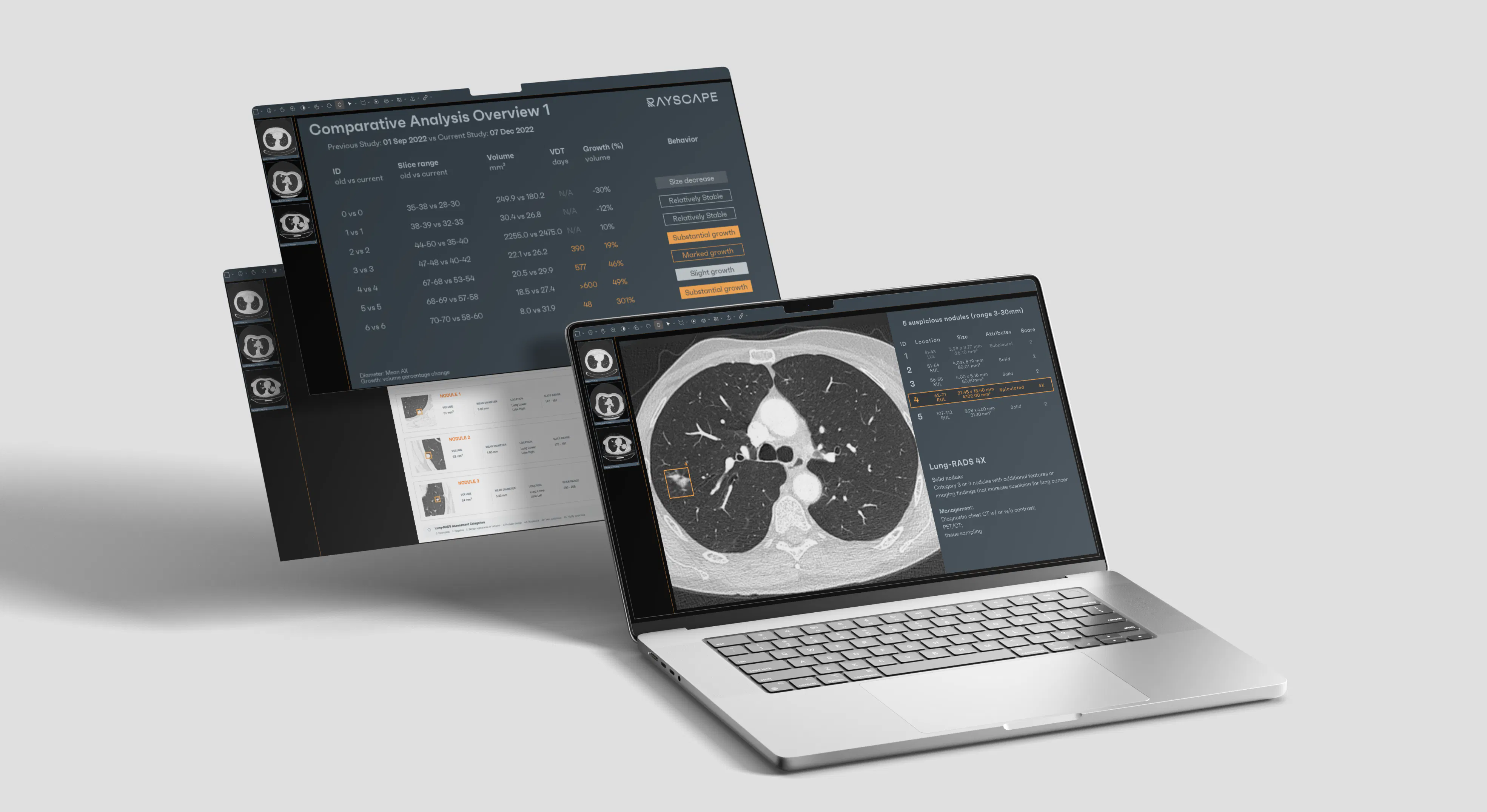
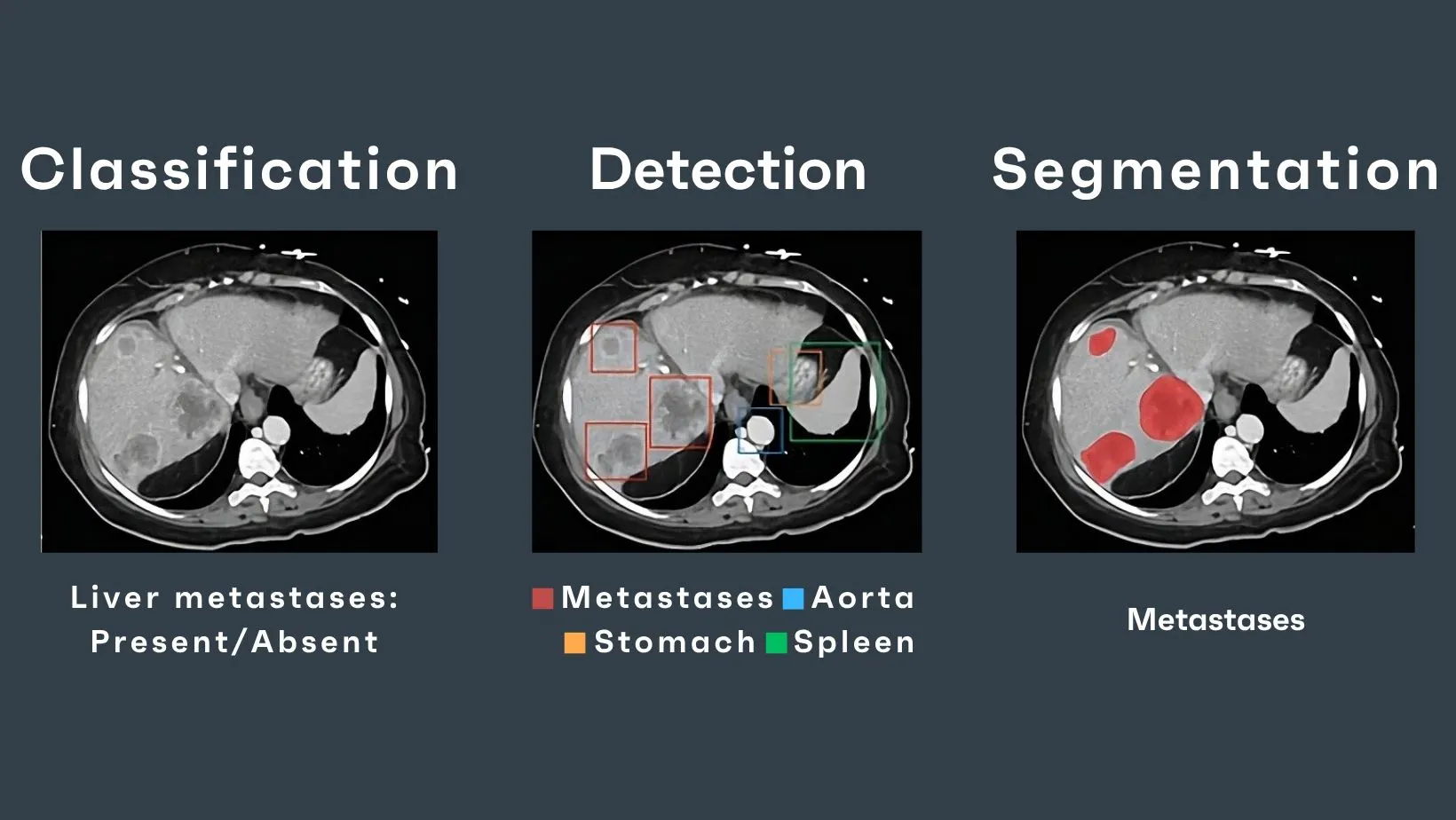
- AI-assisted detection is a hard software requirement. CE-marked software with automatic nodule detection, volumetry, and volume-doubling-time (VDT) calculation must be operational before a facility can submit a bid.
- A full clinical pathway is required. Qualifying and result visits from pulmonology, thoracic surgery, family medicine, internal medicine, or occupational medicine specialists are part of the mandate as this is an interdisciplinary program built around a radiology core.
- The scanner itself must meet a defined technical bar. Multidetector CT, minimum 32 rows, CTDIvol at or below 3 mGy. Systems that supported the earlier pilot phase at lower row-counts will not clear this threshold.
In short: the legal pathway is open, but the operational bar is high, and it appears to have been set deliberately, likely to avoid the quality-control issues seen in earlier screening rollouts internationally where volume outpaced diagnostic rigor.
#2: October 1 is a confirmed launch date — with the financing detail still in motion
Contract periods begin no earlier than October 1, 2026. That date has remained consistent across multiple ministry communications, and it is the date every facility should be planning around. Here is the detail that hasn't been widely reported.
On August 7, 2026 — the NFZ published a draft implementing order (zarządzenie) governing the financial and contractual mechanics of the program, including settlement rules and the reimbursement annex. Public consultation on that draft closed August 14, 2026. AOTMiT's cost modeling projects the program at approximately 12.7 million PLN in its first year, scaling to 38.1 million PLN in year two and 63.6 million PLN in year three, so the funding envelope has been sized. What remains in motion is the final wording on how individual billing codes will be valued — per study, per qualifying visit, and per result visit — as consultation concludes.
Practically, this means regional NFZ branches are expected to open tender proceedings shortly after the implementing rules are finalized. Facilities are being asked to commit to hardware, staffing, software, and clinical partnerships against a fixed launch date, while the precise reimbursement mechanics finish resolving in parallel. This is not a reason for facilities to delay preparation. It is a reason to prioritize the components of a compliant bid that do not depend on the final reimbursement schedule: equipment, credentialing, and software.
#3: This program is built on five years of Polish implementation data, not imported trial protocols
It would be reasonable to assume Poland adapted an international screening framework such as NELSON and applied it directly. That is not the full picture. The regulation follows the conclusion of a five-year national pilot program using NDTK for early lung cancer detection. That pilot produced real-world Polish implementation evidence: efficacy data from international trials, operational evidence on how qualification criteria, dual-reading logistics, and multidisciplinary referral pathways function within Polish healthcare infrastructure, at Polish patient volumes, with Polish staffing constraints.
That is why the eligibility criteria carry the specificity they do. The program targets:
- Standard-risk group: ages 55–74, at least 20 pack-years of smoking history, current smokers or those who quit within the last 15 years.
- Extended-risk group: ages 50–74 with a comparable smoking history plus an additional risk factor — COPD, pulmonary fibrosis, occupational carcinogen exposure (asbestos, silica, radon, diesel exhaust, among others named explicitly), or a personal or first-degree family history of smoking-related cancers.
That level of granularity reflects five years of observing how risk stratification actually performed across Polish clinical settings. In effect, this program was designed to operate a nationwide, interdisciplinary, dual-read screening ecosystem capable of sustaining real clinical volume without breaking down under its own logistics, which is a considerably harder problem than the imaging component alone.
If you've read this far, your facility is already ahead of most
Most departments will wait for the regional tender documents to arrive before addressing compliance. By then, the radiologist credentialing letter from the voivodeship consultant, the CE-marked AI software procurement and validation, and the CT protocol audit all become tasks executed under deadline pressure rather than work completed in advance.
Here is the operational sequence, organized by how it actually needs to unfold.
Hardware compliance is binary
The 32-row minimum and the 3 mGy CTDIvol ceiling are gating conditions on the tender application. If a facility's primary scanner runs the lower-row-count protocol referenced in earlier pilot-phase documentation, it will not qualify under this iteration of the program. This is worth confirming now, before a bid is built around equipment that disqualifies the application at the outset.
Radiologist case counts need a verified paper trail before they're needed
Three hundred independently reported low-dose chest CT studies in five years is achievable for most experienced chest radiologists — but "achievable" and "documented and confirmed by the voivodeship consultant" are separate conditions. Facilities should initiate that verification now. Consultants have limited capacity, and being the fortieth request in the queue the week tenders open is an avoidable risk.
The software requirement is the one condition a facility can fully resolve before the tender opens — and where Rayscape removes the guesswork entirely
Unlike staffing certifications or capital equipment procurement, which require time, budget cycles, and sometimes new hardware, a CE-marked AI platform for NDTK reporting can be deployed, validated, and made fully operational within weeks. It must be operational at the moment a bid is submitted, not promised for delivery after contract award.
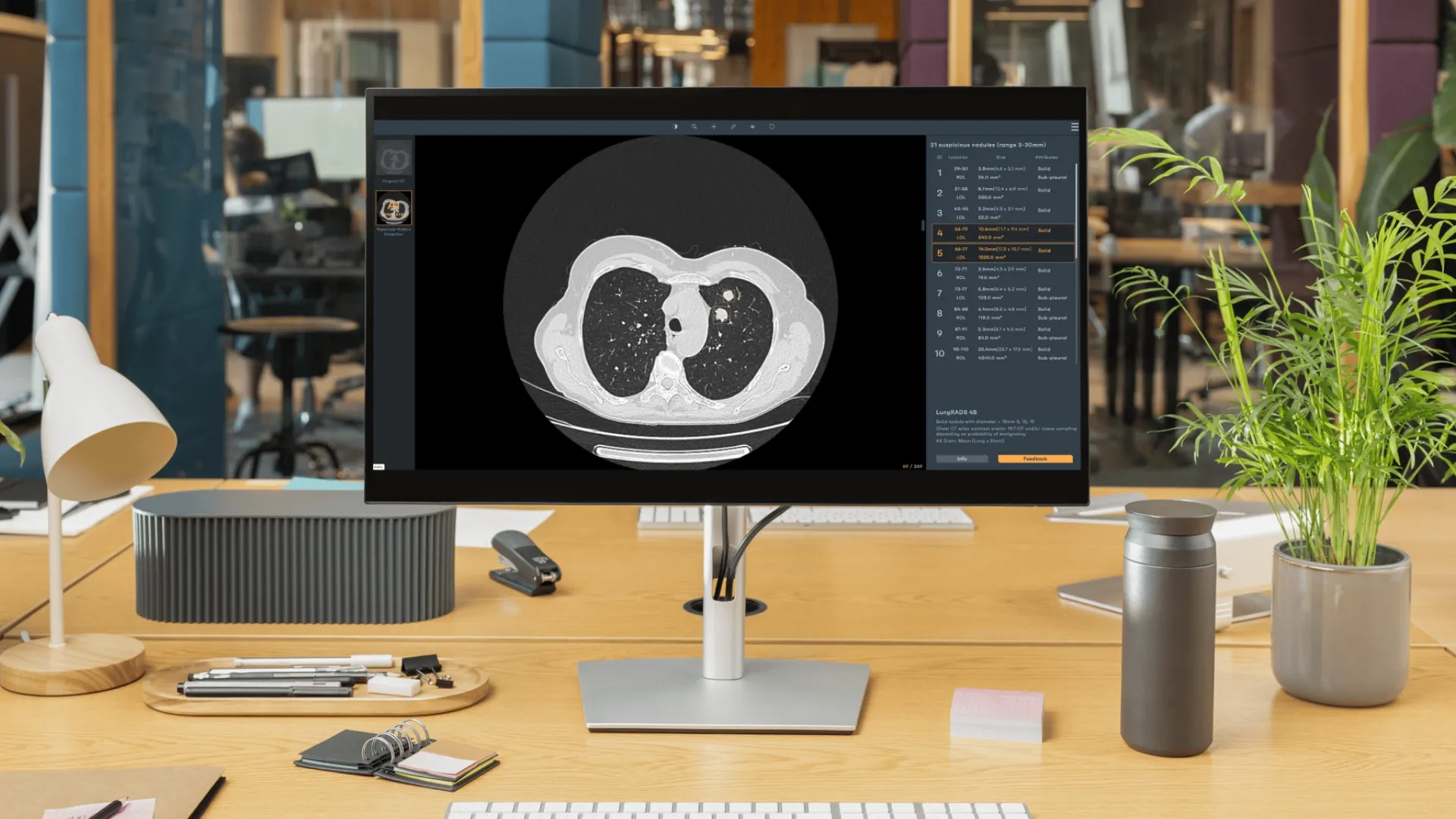
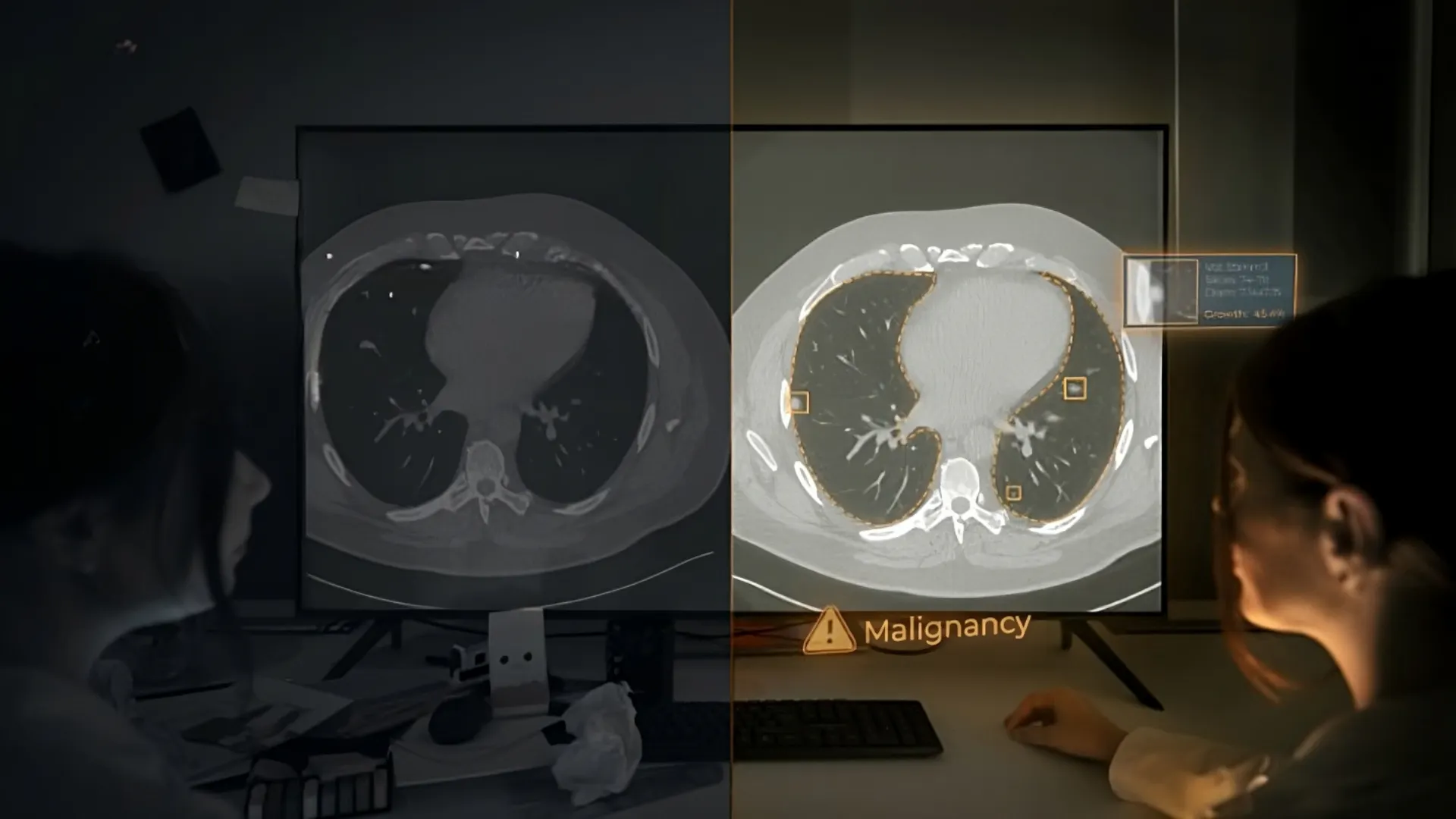
This is precisely the gap Rayscape is built to close. Rayscape provides a CE-marked, clinically validated AI solution for chest CT that satisfies all three components of the software condition in a single platform: automatic nodule detection, volumetric measurement, and automated volume-doubling-time calculation. Rather than requiring departments to piece together separate tools for detection, measurement, and growth-rate tracking — and separately validate each one — Rayscape delivers the complete regulatory requirement as one integrated system, already CE-marked and ready to be documented in a tender file.
This matters beyond compliance on paper. Rayscape is built to integrate directly into existing PACS and reporting workflows, so departments scaling from pilot-level volume to full population-level screening volume are not managing a parallel system alongside their existing infrastructure. For a department preparing a competitive bid, that translates into a shorter path from decision to deployment, a cleaner audit trail for the tender file, and radiologists who are not absorbing new software friction on top of a mandatory dual-reading workload.
There is also a direct financial dimension worth stating plainly. Because the software condition is a prerequisite for bid eligibility, a facility without a compliant solution in place cannot access the NFZ contract at all — regardless of how strong its equipment, staffing, or clinical pathway is.
Deploying Rayscape ahead of tender season is what converts a facility's other investments — the scanner, the credentialed radiologist, the referral network — into an eligible, fundable bid. With AOTMiT's own projections placing the program's funding at 12.7 million PLN in year one and scaling toward 63.6 million PLN by year three, the software decision a department makes now determines whether it participates in that funding pool from the first contracting round, or watches competitors in the same region secure it instead.
The clinical pathway is a partnership problem, not a paperwork problem
Qualifying and result visits from pulmonology, thoracic surgery, family medicine, internal medicine, or occupational medicine specialists require functioning referral relationships, not simply names listed on a form. Where those relationships do not already exist, this is typically the longest lead-time item, and merits attention now rather than in the final weeks of tender preparation.
The window is narrower than it appears
Regional tenders are expected to open shortly after the NFZ finalizes its implementing rules — and with the draft financing order already in its final consultation stage this week, that gap may close faster than most facilities are anticipating. October 1 has held as the operative start date across every recent announcement, which means facilities treating preparation as a September problem are the ones most exposed to missing the first contracting round entirely.
The facilities that prepare now — equipment audited, radiologist credentials verified, and a compliant AI platform validated and live — will be the ones positioned to bid the moment the window opens, rather than assembling a case under deadline pressure against a date that was never going to move.
If your team wants to see how Rayscape's CE-marked platform for NDTK detection, volumetry, and VDT fits into your specific PACS environment, and how quickly it can be deployed ahead of your region's tender, reach out to Rayscape for a walkthrough.
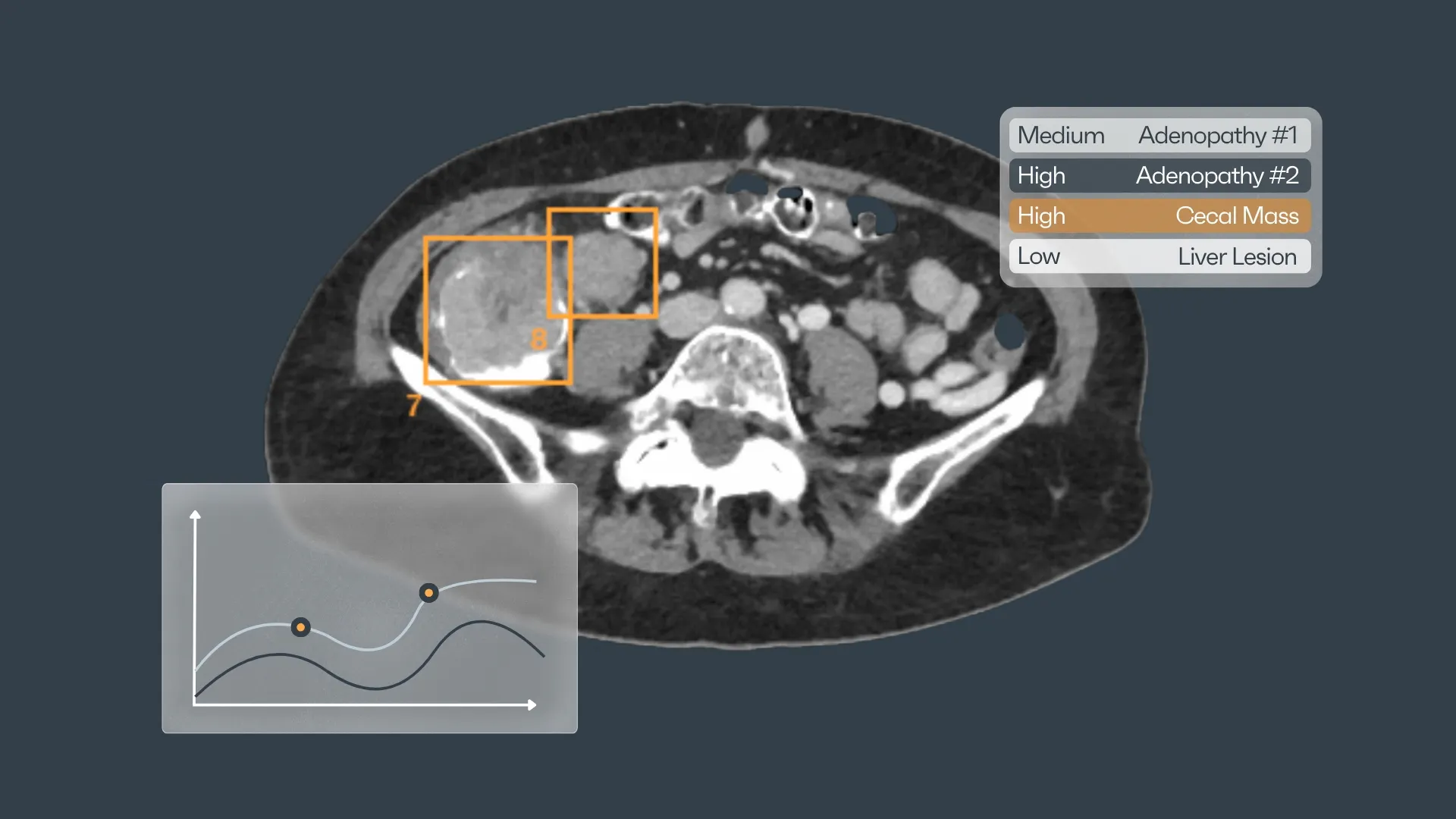

Discover how Rayscape works
integrate Rayscape AI into
your hospital's infrastructure
and improve both your
daily workflow and patients' experience.
